Is red wine good for you?

Is red wine good for you?

Red wine contains powerful antioxidants, and many sources claim that drinking it has health benefits. What does the research say?

Researchers have studied wine — especially red wine — extensively for its possible health benefits.

This article looks at the evidence behind the benefits of red wine, along with health warnings, and discusses whether people should drink it.

Health benefits

a bunch of people doing a cheers with glasses of red wine
Health benefits

Red wine has been part of social, religious, and cultural events for hundreds of years. Medieval monasteries believed that their monks lived longer partly because of their regular, moderate drinking of wine.

In recent years, science has indicated that there could be truth in these claims.

According to a 2019 study, although notably there are no official recommendations around these benefits, drinking red wine in moderation has positive links with:

  • cardiovascular disease
  • atherosclerosis
  • hypertension
  • certain types of cancer
  • type 2 diabetes
  • neurological disorders
  • metabolic syndrome

How might red wine improve health?

Red wine may get its health benefits from its antioxidant, anti-inflammatory, and lipid-regulating effects.

Red wine — made from crushed dark grapes — is a relatively rich source of resveratrol, a natural antioxidant in the skin of grapes.

Antioxidants reduce oxidative stress in the body. Oxidative stress has clear links with many diseases, including cancers and heart disease.

There are many healthful, antioxidant-rich foods, including fruits, nuts, and vegetables.

Whole grapes and berries are better sources of resveratrol than red wine, and because of the health risks linked with drinking alcohol, getting antioxidants from foods is likely to be more healthful than drinking wine.

People may need to drink a lot of red wine to get enough resveratrol to have an effect, which could do more harm than good.

That said, when choosing between alcoholic beverages, red wine may be more healthful than some others.

1. Cardiovascular health

Many studies through the years have shown a positive link between moderate red wine drinking and good heart health.

Recently, a 2019 review reported that drinking red wine is linked with a lower risk of coronary heart disease, which is a leading cause of disease and death in the United States.

The authors concluded that red wine might have cardioprotective effects.

However, the American Heart Association (AHA) say that such studies do not show cause-and-effect relationships. Other factors may play a role. For example, people who drink red wine in moderation may also follow a more healthful lifestyle or a Mediterranean diet.

They also point out that excess alcohol can directly harm the heart. To stay safe, people should stay within official CDC guidelines from the Centers for Disease and Prevention (CDC), which define moderate drinking as:

  • 1 glass of wine per day for females
  • 2 glasses of wine for males

One glass of wine is 5 ounces (oz) of 12% alcohol by volume.

2. Gut health

A 2018 study reports that polyphenols from red wine and grapes can improve the gut microbiota, contributing to a healthy gut.

According to 2012 research, red wine compounds may also act as prebiotics, which are compounds that boost healthy gut bacteria.

In 2016, researchers suggested red wine could reduce the risk of heart disease through its effects on the gut microbiome.

However, the research is limited, and doctors need more evidence before understanding the true effects of red wine on gut health.

3. Type 2 diabetes

One 2015 study has shown that drinking a glass of red wine with dinner “modestly decreases cardiometabolic risk” in people with type 2 diabetes and that a moderate intake of red wine is usually safe.

The scientists believe that the ethanol in wine plays a crucial role in metabolizing glucose and that the nonalcoholic ingredients may also contribute. They call for more research to confirm the findings.

Anyone with diabetes should check with their doctor before drinking alcohol.

According to the American Heart Association (AHA), resveratrol — an antioxidant in red wine — may reduce blood pressure and increase levels of HDL (good) cholesterol.

4. Blood pressure

In 2006, scientists reported that red wine compounds called procyanidins help keep the blood vessels healthy.

Many people find an alcoholic drink relaxes them, but results published in 2012 indicate that nonalcoholic red wine, too, can reduce blood pressure. This could be a more healthful option.

It is important, however, to note that drinking too much alcohol can cause high blood pressure and arrhythmia, or an irregular heart rhythm.

5. Brain damage after stroke

A 2015 review reports that resveratrol may help protect against secondary brain damage after a stroke or central nervous system injury. This is due to its positive effects on inflammation, oxidative stress, and cell death.

However, these studies show the effects of resveratrol rather than red wine itself.

6. Vision loss

Resveratrol may also help prevent vision loss by reducing inflammation and oxidative stress, according to 2016 research.

Many forms of age-related eye conditions that cause vision loss involve these factors, including:

  • glaucoma
  • cataracts
  • diabetic retinopathy
  • macular degeneration

7. Cancer

Some research says that drinking red wine in moderation could reduce the risk of certain cancers.

However, the National Cancer Institute say there is strong evidence that drinking alcohol can cause certain cancers, especially drinking heavily over time.

This is partly because it creates toxins in the body, damages body tissues, and creates oxidation. This means that the potential adverse effects of alcohol may outweigh any benefit from resveratrol.

The National Cancer Institute links alcohol use with a range of cancers, including mouth, throat, liver, breast, and colon cancer.

For most people, enjoying red wine in moderation is safe, but it is important to keep in mind that drinking alcohol in excess is harmful.

Some studies, however, link moderate red wine intake with reduced risk or better outcomes in cancer. The following sections look at specific studies into red wine and particular types of cancer.

Breast cancer

Alcohol increases estrogen in the body, a chemical that encourages the growth of cancer cells.

However, a 2012 study says that the aromatase inhibitors (AIs) in red wine — and to a lesser extent, white wine — may reduce estrogen levels and increase testosterone in females approaching menopause.

The researchers say that this may be why red wine is less associated with increased breast cancer risk than other types of alcohol.

Lung cancer

A 2017 review reports that resveratrol has protective effects against cancer in both human and laboratory studies. The mechanisms include preventing cell proliferation and tumor growth, inducing cell death in cancer cells, and inhibiting metastasis.

However, again, these effects are for resveratrol rather than red wine itself.

Prostate cancer

A study from 2019 reports that males who drank alcohol had a slightly lower risk of lethal prostate cancer, and that red wine had links with a lower risk of progression to lethal disease.

The authors say that these results mean moderate alcohol consumption is safe for people with prostate cancer.

8. Dementia

According to a 2018 report, researchers have found an increased risk of dementia in people who abstained from drinking wine.

The authors say that this may be because of the neuroprotective effects of polyphenols and other compounds in wine that can reduce inflammation and alter the lipid profile in the body.

9. Depression

A 2013 study on 5,505 people over 7 years showed that those who drank between 2–7 glasses of wine each week had lower levels of depression.

They also reported that people who drank heavily were more at risk for depression.

10. Liver disease

Alcohol is a common cause of liver disease. However, a moderate intake of red wine has links with good liver health in some contexts.

According to a 2018 study, modest alcohol intake — particularly wine — is linked with lower liver fibrosis in people with nonalcoholic fatty liver disease.

That said, the impact of red wine on liver health is complicated. Although it provides antioxidants and reduces oxidative stress, drinking can also increase uric acid and triglycerides, which damages the liver.

Researchers need to complete more studies to work out the complex effects of moderate red wine intake on liver health.

That said, people who currently have liver disease should avoid alcohol altogether.

11. Longer life

Drinking red wine in moderation may reduce the risk of some chronic disease, as discussed above, so it follows that it may help people to live longer.

Indeed, one popularized 2000 study reported that “Men aged 45–64 at entry drinking about 5 drinks per day have a longer life expectancy than occasional and heavy drinkers.”

However, this is likely due to confounding factors, such as diet, as discussed in a 2018 review. For instance, red wine is a common addition to the Mediterranean diet, an eating pattern that has established links with good health and long life.

Red or white wine?

Resveratrol appears to underlie many of the health benefits of red wine.

Red wine contains more resveratrol than white wine as it is fermented with the skins, while white wine is not. Most of the resveratrol in grapes is in the seeds and skin.

Nonalcoholic red wines may also include resveratrol.

Warnings

Wine consumption may have some health benefits, but drinking too much of any type of alcohol can increase health risks.

The Centers for Disease Control and Prevention (CDC) provide guidance on the health risks of drinking too much alcohol.

They report that excessive alcohol use led to around 88,000 deaths in the United States between 2006–2010, shortening the lives of those who died by an average of 30 years.

Further, they state that 1 in 10 deaths among adults aged 20–64 years were related to excessive drinking.

The risks of excessive alcohol use include:

  • heart problems
  • stroke
  • fatty liver disease
  • liver damage
  • mental health conditions
  • certain cancers
  • pancreatitis

People may also experience alcohol poisoning and alcohol use disorder. Heavy drinking is particularly harmful to health.

Should I drink red wine?

For most people, enjoying a glass or two of red wine each day can be part of a healthful diet.

The key is moderation. Regardless of the possible health benefits, drinking excess alcohol can do more harm than good.

Despite any possible benefits, official U.S. guidelines do not recommend that people start drinking or drink more for any reason.

Ultimately, many of the benefits linked to red wine are due to the beneficial properties of resveratrol. Eating grapes and berries may, therefore, be a more healthful option.

Summary

Drinking red wine in moderation may have certain health benefits, including boosting heart, gut, and brain health. This is because it contains compounds with antioxidant, anti-inflammatory, and lipid-improving effects.

Drinking alcohol is not safe for everyone, and drinking more than a moderate amount can cause serious health problems.

Moderate consumption of wine along with a balanced diet rich in fruits and vegetables can be beneficial for your health. One glass for women and 2 glasses for men per day is recommended. 

If you are in Colorado, drop by Avon, Colorado Liquor Store. The experts can recommend the best red wine to drink for your health. 

Top Craft Beers You Need to Try with Romanian Food

Top Craft Beers You Need to Try with Romanian Food

Craft beers have grown in popularity in Romania in the last decade. More pubs, craft beer shops, and microbrews have opened their doors to showcase international but most importantly local, authentic beers.

If you enjoy these beers you are sure not to miss the next to Romanian food. Here are some of the best and sought out brands you should try.

Hophead Beer

They offer an excellent range of beers, as they are the first craft brewery open in Romania. Most of the beers they create have a rich flavor and a heavy taste.

Some of their beers have an enriched coffee flavor which makes them ideal in combination with the Romanian food.

Sikaru Beer

Coming from a Bucharest brewery, they focused on a pallet of ales. You can taste, next to the Romanian food you are enjoying, either a Blonde beer with citrus flower and coriander or the Black Beer which is a stout with a coffee, chocolate and cacao aftertaste.

Their goals are to bring diversity and great taste into the glasses of beer lovers.

Zăganu Beer

You can taste Zăganu Beer alongside Romanian food in the Romanian Craft Beer Bar in Bucharest. It’s also one of the few Romanian beers that you can order online. Right now they only deliver in Romania.

romanian food

They create unpasteurized beer, manually bottled and labeled. The offer pale lager, Schwarzbier style, Belgian red ale, and IPA.

Three Happy Brewers Beer

With an incredible story and design this new Bucharest microbrewery is fresh and a bit weird. After traveling the world and enjoying beer, the three owners behind the brand wanted to bring something new to the emerging beer market in Romania.

Some of the beer you can enjoy with Romanian food are the fruity West Coast IPA, the classical Czech Pilsner or the bitter English Amber.

Cazino Beer

While at the seaside you can grab a Romanian food like mititei alongside a local beer from Cazino Craft. As the city is a mixture of cultural influences, so is the Craft Browny that mixes Romanian malt, German hops, and Belgian yeast.

Mititei Beer

They also have a classic lager and a mix of lager and IPA in their varieties. They pride themselves on creating natural beers out of only 4 ingredients. To find out more about them you can check their site.

Romanian Food and Craft Beer

Avon, Colorado Liquor Store, have made it our mission to offer a large and exceptional selection of rare to everyday wines, beers, and spirits at affordable prices, all while providing excellent customer service.

Health Benefits of Craft Beer

Health Benefits of Craft Beer

Just about everyone who enjoys beer has wondered if it is good or bad for their health. There is no simple answer to this question.

Well, wonder no more. An ever-growing body of research confirms health benefits of craft beer with moderate consumption as part of a healthy diet. In fact, the USDA Dietary Guidelines specifically mention the health benefits of moderate consumption of alcoholic beverages.

The next time you pour yourself a craft beer, or maybe you are enjoying one now, you should know that there are a variety of possible health benefits provided from your favorite malted beverage.

Health Benefits Associated with Moderate Consumption of Beer

  • Decreased risk of weight gain among women who drink moderately, compared to those who don’t drink.
  • Decreased risk of hypertension.
  • Decreased risk of cardiovascular disease, among healthy men, men who have had heart bypass surgery, women and among drinkers with type II diabetes.
  • Beer is a rich source of silicon, which plays a role in increasing bone mineral density and may help prevent osteoporosis.
  • Decreased risk of heart failure especially for moderate consumers.
  • Consumption of alcohol is associated with lower risk of arthritic conditions and lowers the risk and the severity of rheumatoid arthritis
  • Consumption of alcohol can help lower your cholesterol by raising high-density lipoprotein (HDL) levels.
  • Decreased risk of diabetes by roughly 40 percent compared to abstainers.
  • Decreased risk of Alzheimer’s disease, particularly in female non-smokers.
  • Decreased risk of poor cognitive function for men and women.
  • Decreased risk of osteoporosis by increasing bone mineral density.
  • Increases absorption of dietary fiber.
  • Hops contain Xanthohumol, which has been found to have significant anti-cancer activity in liver cancer cells and also in colon mucosa.

Dangers of Over-Appreciation

Beer is a beverage of moderation, as well as the perfect accompaniment to dinner and social occasions. Over the years, nearly all of the health benefits attributed to beer, or any alcoholic beverage, have been associated with moderate consumption of (1 – 2 drinks per day). As with any of life’s pleasures, too much of a good thing can have negative results.

To help avoid negative consequences of drinking, provides a Blood Alcohol Content Calculator to inform beer lovers of the estimated potential blood alcohol content range that one might experience after responsibly enjoying beer.

New research continues to explore the ways in which alcohol affects the human body. Here are some of the possible downsides of excessive consumption.

  • Alcoholism.
  • Cancer – For every study showing a benefit of moderate alcohol consumption there is another showing the risk of certain types of cancer increase with consumption of alcohol. These include oral cancer, hormone dependent forms of breast cancer, and possibly stomach cancer.
  • Diabetes, insulin dependence, and metabolic syndrome – whereas moderate consumption actually lowers the risk of diabetes compared to non-drinkers, heavy alcoholic consumption increases the risk of diabetes.
  • Fetal Alcohol Syndrome – Doctors aren’t sure how much alcohol (if any) a pregnant mother may safely consume without placing her baby at risk. For this reason, current U.S. health policy advises women who are pregnant or trying to become pregnant against drinking any alcohol.
  • Gout.
  • Hangover – described on Wikipedia as the “sum of unpleasant physiological effects following heavy consumption of alcoholic beverages”, and “a natural and intrinsic disincentive to excessive drinking.” Be sure to enjoy your favorite beer in moderation, and drink plenty of water while enjoying beer or other alcoholic beverages to help combat this side effect.
  • Heart attack – among men and women.
  • Heart failure.
  • Pancreatitis among heavy drinkers.
  • Psoriasis.
  • Stroke when drinking is heavy (more than six drinks per day) or at a binge level, and in the two hours immediately following consumption of alcohol.

If you want to try out different beer and want to know the benefits they offer, come and visit Vail, CO Liquor Store.

10 reasons why drinking wine is good for you

10 reasons why drinking wine is good for you
Wine is not just another alcoholic drink. It is often called the nectar of Gods, it has been around for thousands of years, and it is probably the oldest known drink besides water. Plato said that nothing more excellent or valuable than wine was ever granted by the gods to man, and we have no ambition to contradict Plato!

The list of health benefits of drinking wine – moderately, of course – is long and is becoming longer every year. Forget about the apple, one glass of wine a day will most definitely keep the doctor away! It’s not only red wine that has health benefits, but white wine too – red wine is richer in polyphenols, but the antioxidants contained in white wine are stronger!

Take a look at the top 10 reasons why drinking wine is good for you:

Controls your cholesterol level

Studies have confirmed that red wine raises the level of HDL or ‘good cholesterol’, which helps unclog your arteries. It is recommended to have one or two glasses with a meal every day.

Supports better blood circulation

Light-red wines help expand blood vessels thus helping circulation. Recommendation: have one small glass of wine with each meal, maximum three times a day.

Prevents heart disease

Red wine is rich in an antioxidant called resveratrol that may help protect the lining of blood vessels in your heart. In order to profit from red wine’s antioxidant benefits, one should have a light-red wine with meals and before going to sleep. Men should have 0,3 liters a day and women should have 0,2 liters a day.

Good for stress relief

If you are constantly stressed, a glass of wine may be of help. You should take a break and have a glass of wine slowly and enjoy every sip. No particular wine is recommended; you should have your favorite wine. Still, bear in mind that red wines calm and relax, while white wines energize.

Can help prevent colds

Traditional medicine has said that drinking wine can prevent common cold because it can help kill viruses and bacteria. Scientists have proven that moderate wine drinking can boost immunity to colds up to 85 percent.

Will help cure a sore throat

Take wine in small sips and let it glide over your tongue and swallow slowly. This is believed to help cure a sore throat. You can heat the wine and add spices to make mulled wine, but pay attention not to boil it – too high a temperature will destroy all the vitamin C and iron the wine contains.

Helps prevent anemia

Moderate drinking of red wine can help prevent and even cure anemia. It is recommended to have a small glass of wine with your lunch every day and a glass of wine every evening.

Supports your weight loss.

Alcohol and weight loss are considered enemies, but studies have shown that people who drink wine daily actually have a lower body mass, narrower waists, and less abdominal fat than people who drink liquor.

Helps build better bones

A study has shown a connection between moderate wine consumption and increased bone mineral density. The positive effect of wine on the health of bones has been proven for women, but there is research suggesting that wine can have beneficial effects on men’s bones too.

Will help you stay younger

Wine drinkers have been found to have up to 40 percent more antioxidants in their bodies compared to non-wine drinkers. Antioxidants ‘catch’ free radicals and prevent cell aging. Wine lovers on average live longer and stay younger and more vital.

Note:

Moderate drinking or drinking moderately has been mentioned several times in this article. This article is only informational and meant to be interesting. It is not based on any scientific studies. Moderation is the key to profit from the beneficial effects of wine. Recommended quantities are not more than 0,3 liters a day. And no, drinking the whole bottle doesn’t double or triple the benefits!

Wine appears to be particularly beneficial because it contains high amounts of antioxidants. That said, drinking more wine does not provide greater benefits. Again, drink in moderation. 

Vail, CO Liquor Store, offer a wide collection of red wines and other alcoholic drinks. Stop by the shop anytime! 

Why Tequila Is Actually Good For You

Why Tequila Is Actually Good For You

There is no doubt that when people like their tequila, they really love it. When it comes to this alcohol of choice, there really are no boundaries or limitations.Volume 90% 

As the Pringles campaign so eloquently put it, “Once you pop, the fun don’t stop.”

You know that group of friends who can never decide what type of round to buy at the bar? These people spend their time arguing between Jameson, vodka and Fireball.

But do you know the one suggestion that will shut them the F up? That’s right — tequila.

I mean, people went as far as creating deep-Fried tequila that will actually get you drunk. Do you see people doing that with vodka? I think not.

So get ready to open your eyes to the benefits of tequila, some of which you never even thought could be possible.

1. It helps lower blood sugar

How exactly is this possible? Well agavina, which is a sugar that comes from the agave plant used to produce tequila, triggers insulin production and therefore lowers blood sugar.

We can thank our friends at the American Chemical Society for this one.

2. It aids in weight loss

Yes, you heard me correctly; there are certain components in tequila that can help you lose weight. In further tests done by the ACS, tequila helped overweight mice lose a significant amount of pounds.

3. You don’t really get hungover

You may quickly disagree, but we’re not talking about that sh*tty watered-down tequila most people are accustomed to. Rather, we are discussing real 100 percent pure agave tequila.

You don’t really get hungover

Try drinking this instead and see if that headache becomes a memory of the past.

4. You can drink it straight without wanting to throw up afterward

Have you ever tried throwing back straight shots of vodka? Chances are they’re coming right back up.

When it comes to tequila, you can rest assured that it will sail smoothly down your throat.

5. It helps fight cholesterol

OK, let’s get scientific for a moment. Increasing fiber in your diet helps in the reduction of cholesterol levels.

Like fiber, agavins lower triglycerides in the blood and levels of cholesterol as determined by researchers in Plant Foods For Human Nutrition.

6. Tequila may be used to help treat colds

Back in the 1930s, doctors in Mexico used to promote this tequila concoction to fight off the common cold: .5 ounce of tequila blanco; .5 ounce of agave nectar; .5 ounce of fresh lime juice.

7. It helps you numb the pain

Tequila has been proven to dilate the blood vessels, which results in better blood flow, minimizing pain levels. When it comes to emotional pain, you can bet tequila is the remedy for that too.

8. It can serve as a “drug delivery system”

WTF does that even mean? OK, so basically when drugs are taken, the acid in your stomach typically breaks them down before they can even hit your intestines.

Why is this a problem? Because it decreases the drug’s effectiveness. Tequila serves as a protective barrier of these drugs as they work their way into your system.

9. Diabetics can indulge too

The high amount of sugar that is present in alcohol is what poses an issue for diabetics. The thing with tequila, however, is that it has significantly less sugar; therefore, it will have much less of an impact on blood sugar.

10. You look like a damn badass on a first date

How many times do females worry about what to order on the first date? I only know this because I’ve had countless conversations with friends on whether or not it’s appropriate to order anything but wine.

The answer? Order tequila and stand out from the crowd. Make a long-lasting impression because you can be certain he will always remember you as the girl who ordered tequila on the rocks on your first date.

11.  It won’t make you feel as fat as vodka and beer

Raise your shot glass and cheers to this because tequila helps to regulate the absorption of fat in your intestines! And when it comes to alcohol, everyone knows how much drinkers detest bloating.

12. You don’t have to waste your calories on a chaser

One of the best parts about ripping shots of tequila is that you don’t need soda to chase them with.

Honestly, you don’t really even need a chaser because the taste of tequila is that good, but if you can’t really stomach it, there are always limes!

13. Everyone respects a person who rolls up with a bottle of tequila to a pregame

There are always those people who insist on bringing a bottle of Fireball to every pregame they go to and the word we use to describe these people is: basic.

A unique individual busts out the tequila and really gets the party started.

Everyone respects a person who rolls up with a bottle of tequila to a pregame

14. It cleans your colon in a different way than you may think

Touching upon the points found in eight, Researchers at Mexico’s University of Guadalajara claim that blue agave found in tequila helps deliver drugs to the colon, which helps to treat illnesses such as Crohn’s disease, colitis, IBS and even cancer.

15. It chills you out and helps you sleep

Everyone knows tequila and relaxation go hand in hand. You don’t need to drink an excessive amount… one or two shots will do.

Again, too much alcohol is never healthy, but if you are inclined to have just 1 to 2 shots once in a while, tequila might not be such a bad choice. What are you waiting for? Visit Village Warehouse Wines and Spirits, a liquor store Avon, Colorado, to replenish your stash and enjoy more tequila health benefits! 

What Is Mezcal, and How Is It Different from Tequila?

What Is Mezcal, and How Is It Different from Tequila?

Often described as tequila’s smoky-tasting cousin, mezcal is a unique type of alcoholic beverage that’s making waves in the global liquor industry.

Originally from Mexico, mezcal has recently experienced a huge surge in popularity, and it’s not showing any signs of slowing down.

In 2017, approximately 3 million liters of mezcal were exported to 60 different countries. Half of this quantity went to the United States.

Mezcal’s popularity is often attributed to the millennial generation’s enthusiasm for craft cocktail culture. It brings a new, exciting flavor profile to the well-established selection of spirits that have graced cocktail menus for generations.

This article provides an overview of mezcal, including how it differs from tequila and some ways to drink it.

What is mezcal?

Mezcal is a type of distilled alcoholic beverage made from the cooked and fermented hearts, or piñas, of agave plants.

The word mezcal is rooted in the Aztec language and loosely translates to “oven-cooked agave.” This alludes to the production process agave undergoes as it’s transformed into this flavorful spirit.

Agave is a large, flowering succulent that thrives in the desert climates of Mexico and Southwestern parts of the United States. There are over 200 species of agave, but not all of them contain enough fermentable sugar to be made into mezcal.

Mezcal can be made from over 30 different types of agave, but the vast majority is made from a variety known as Agave espadin. This particular kind of agave is primarily grown in Oaxaca, Mexico, a region known as the home of mezcal.

SUMMARY

Mezcal is a distilled spirit made from cooked and fermented agave plants.

Mezcal and tequila are not the same

Mezcal and tequila are often confused for one another, as they’re both Mexican spirits made from similar ingredients. Tequila is a type of mezcal, but mezcal is not always tequila.

Although both spirits are made from agave, they differ in flavor, production methods, and origination.

Come from different regions

The vast majority of mezcal comes from the Mexican state of Oaxaca, but it can be produced in any of the following regions:

  • Oaxaca
  • Durango
  • Guanajuato
  • San Luis Potosi
  • Tamaulipas
  • Michoacan
  • Puebla
  • Zacatecas
  • Guerrero

On the other hand, tequila has more limitations regarding where it may be produced. According to Mexican law, tequila can only be produced in these five regions of Mexico (4):

  • Jalisco
  • Nayarit
  • Guanajuato
  • Tamaulipas
  • Michoacan

Variations in climate can affect the flavor and quality of the final beverage. Thus, the products are unique, depending on where they’re from.

Made through different processes

Mezcal and tequila are made via distinct production methods.

Both spirits utilize a basic method of cooking, fermenting, and distilling agave hearts, but the similarities end there.

Tequila can only be made from blue agave plants. Mezcal can be made from any number of agave species, including the blue variety.

When making tequila, the hearts of blue agave are typically cooked in industrial, above-ground ovens or autoclaves before being fermented and distilled.

For mezcal, the traditional cooking process occurs in large underground pits lined with volcanic rock. This underground “oven” is fueled with burning wood and covered with dirt, allowing the agave hearts to smoke and bake until they’re ready for fermentation.

They have different flavors

Whether you consider yourself a connoisseur of Mexican spirits or just enjoy an occasional cocktail, you’ll likely agree that the most obvious difference between tequila and mezcal is the flavor.

Some flavor differences can be attributed to where each spirit is made and the climate in which the agave was grown. Their unique production processes and whether or not the liquor was aged also greatly influence the taste.

On the most basic level, tequila tends to have a smooth, sweet flavor, whereas mezcal is often described as savory and smoky. The smoky quality is usually attributed to the underground ovens used to cook the agave.

SUMMARY

There are several differences between mezcal and tequila, including taste and how and where they’re produced.

How do you drink mezcal?

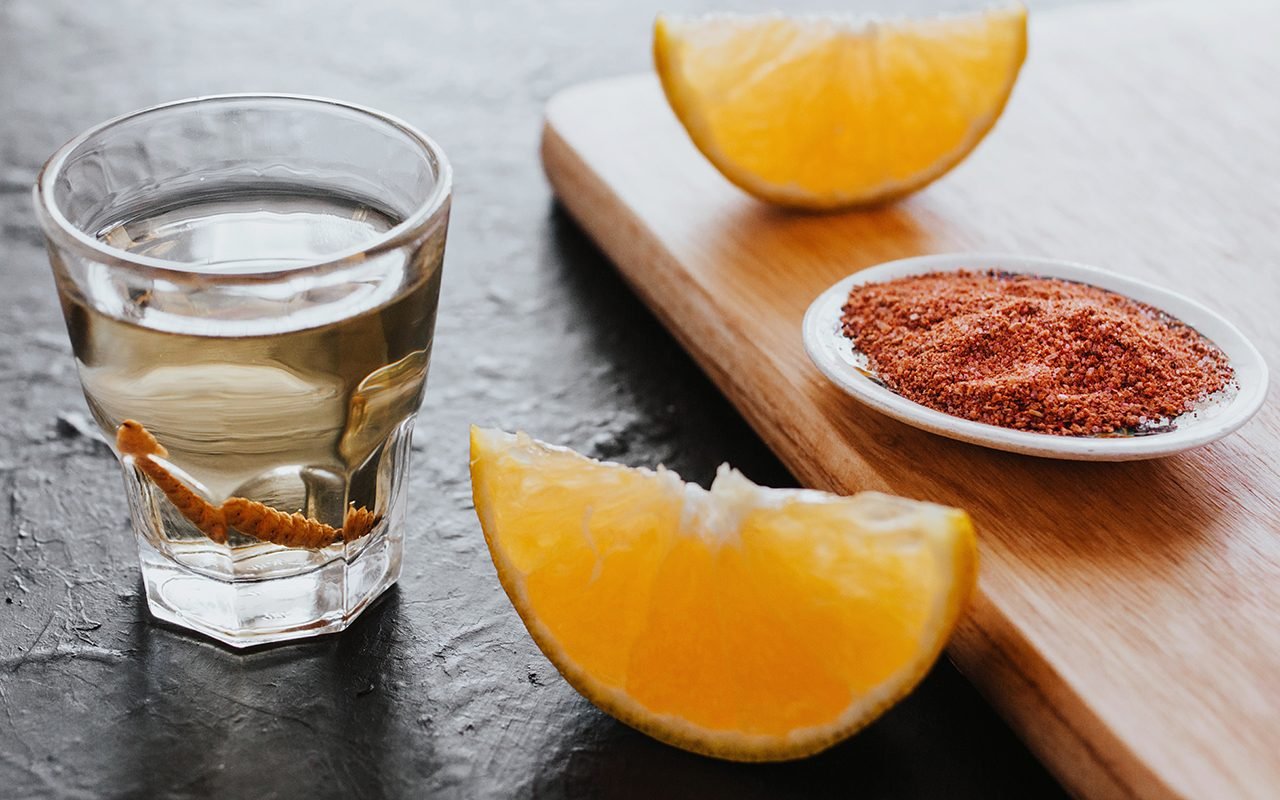
In Mexico, mezcal is traditionally consumed straight. It may be served with a pinch of chili salt and a slice of orange on the side to complement and enhance its natural flavor.

Mezcal aficionados insist this is the only way to truly enjoy and savor its full flavor.

However, in other countries, especially in the United States, mezcal is taking center stage as a craft cocktail ingredient. You’ll find it featured in trendy, innovative recipes, as well as in remixed versions of classics like old fashioned, margaritas, negronis, and palomas.

Whether you’re a traditionalist or brand new to the world of mezcal, you’re likely to find a preparation method that suits your taste. Just remember to drink responsibly.

SUMMARY

Traditionally, mezcal is consumed straight with chili salt and an orange slice. Modern craft cocktail culture utilizes this drink in a variety of classic and new recipes.

The bottom line

Mezcal is a distilled spirit that has recently experienced a sharp rise in popularity.

While it’s often confused with tequila because they’re both from Mexico and made from agave plants, the similarities end there. They are made in different regions using distinct methodologies and have unique flavor profiles.

It’s traditionally consumed on its own, but it’s also making a name for itself in the world of craft cocktails.

Again, too much alcohol is never healthy, but if you are inclined to have just 1 to 2 shots once in a while, tequila might not be such a bad choice. What are you waiting for? Visit Village Warehouse Wines and Spirits, an Avon, Colorado Liquor Store, to replenish your stash and enjoy more tequila health benefits! 

Bar Management Guide: How to Run a Successful Bar

Holding hands, you and your bar sit looking into each other’s eyes. Later, you and your bar sneak into a movie, giggling. Ah, bar management. When times are good, it’s like young love.

Bar Management Guide: How to Run a Successful Bar

We want that for you and your bar. To get you there, we’re gonna walk you through three crucial parts of running a profitable bar and efficiently. Those are smart ordering, bar cleanliness and organization, and making your bar a great place to work. Then we’ll look into bar manager salaries and cover some top bar management tips to help you become a successful bar manager.

If you choose to read along and take it all to heart, it’ll be the start of a beautiful relationship.

Purchase and Order Smart

Running a bar well is all about being smart with your ordering. And successful liquor ordering is all about consistent liquor inventory management, strategic purchasing, choosing the right distributors, and keeping your invoices organized.

Take Inventory Regularly

If you consistently take inventory, you’ll have a large set of data you can depend on. Then you can make confident ordering and purchasing decisions that address the specific needs of your bar. You can also keep your happy customers and make big bunches of money.

However often you choose to take inventory for a product, daily, weekly, or monthly, make sure you stick to it.

Consistency makes your inventory numbers reliable, and that’s the most important part. That’s the only way for you to manage a successful bar. You must figure out exactly what items your bar needs. It’s so important, in fact, we included it on our list of the 6 most important bar manager duties.

Figure Out What Your Bar Needs

To order your liquor just right, you’ll need to consider two things from taking your inventory: inventory usage rates and par levels. Here’s how it shakes out:

  1. Grab last week’s invoices. Compare those to your inventory usage (read about calculating inventory usage). This will help you figure out how much you received versus how much you used.
  2. Look at the par levels. This is the minimum amount of inventory you should have on your shelf for any product at a given time.
  3. Considering steps 1 and 2, create new order totals for your wine, beer, and liquor. You’ll need to do this for every individual product you have.
  4. Contact your reps place the orders.

But before you contact a distributors, make sure they’re a good fit for you.

Choose the Right Alcohol Distributors

There are a gajillion distributors, and there are a few things to consider when choosing them. It’s not always about the lowest price. You should also think about:

  • Delivery costs. They vary and can be a rude awakening if you’re not expecting it. Be aware.
  • Extra services. Some keg distributors will clean your taps for free, for example. If you ask. And it doesn’t hurt to ask.
  • Delivery schedule. You may need weekly deliveries, you may not. Do you need Prosecco to come in on Friday mornings only? Maybe you sell a bunch of it over the weekend and have no shelf space for it on other days. Make sure the schedule works for you and your bar before committing.
  • Breakage fees and volume discounts: Pricing can often depend on how big you go. Some distributors will charge a fee if you order less than case, also known as a breakage fee. Some will also drop the price if you order bulk.

Luckily, Avon, CO Liquor Store makes finding distributors a breeze. Distributors use this list to digitize their catalogs and make all their products and services discoverable by bar owners and operators everywhere.

What’s more, you can use EasyList to compare prices across suppliers, and learn how other buyers have priced those products. That way you know exactly what you’re getting into.

Once you find the right distributor, it’s essential that you keep a detailed record of everything you buy from them.

Bar Invoices

You need an invoice history to figure out the next order to place. Without it, you won’t know how much product is coming in, and you’ll screw your inventory up. And that means inaccurate usage, pour cost, and par levels. Check out our pour cost calculator guide to see how to figure it out yourself!

That means you have to file your invoices, one-by-one, and make sure they’re organized and accessible. Which can be a major pain.

It’s worth noting that bar inventory software like BinWise Pro can do it for you. It smoothly tracks your inventory, orders, and invoices, and keeps everything accessible at a moment’s notice.

That’ll allow you to spend your time making creative, profitable decisions, instead of goofing around in file cabinets and spreadsheets. Just sayin’.

But your purchasing records aren’t the only thing you need to keep clean and organized. Once your liquor is ordered, it’s time to sell it. The easiest place to do that is in a tidy bar that’s running like a well-oiled machine.

Optimize Bar Operations

85% of customers won’t go to a business if it has negative online reviews about its cleanliness.

To stay on top of your bar’s hygiene, your operations should be process-driven and your physical space organized. That means using bar cleaning and opening/closing checklists, creating a bar operations manual, and paying special attention to the layout of your bar.

Bar Cleaning Checklists

Bar cleaning is a lost art. Do you know when your wine by the glass bottles were opened? How about the last time you cleaned your beer lines?

The key to answering these questions, and others like them, is using bar cleaning checklists. For everything. Running a bar’s FoH bar operation well is all about standardizing your bar management processes, and that’s what checklists were born for. We’ve even got a free bar cleaning checklist you can download.

Different bar cleaning duties require different intervals and, thus, different checklists.

Here’s what you need:

  • Daily bar cleaning checklist (e.g., wiping the bar down, cleaning the bottles in the speed wells)
  • Weekly bar cleaning checklist (e.g., wiping down bar stools, cleaning the refrigerator)
  • Monthly bar cleaning checklist (e.g., flushing tap lines, pest control)
  • Bartender duties checklist (e.g., bartender-specific opening, bar closing checklist, and side work duties)

Nail down a cadence for everything you need to clean and your customers will thank you for it.

Bar Opening and Closing Checklists

In addition to daily, weekly, and monthly bar cleaning checklists, use bar opening and closing checklists for your bartender and barback duties.

  • For bar opening checklists, think setting out chairs and floor mats, squeezing fresh juices, and setting out bar towels
  • For the bar closing checklist, set washed glasses up to dry, make sure everything is stocked, and date any wine bottles opened
  • Not only will these keep your bar’s operations humming along, but it’ll keep your staff focused and prioritized.

Your Bar Operations Manual

The bar operations manual is the source of truth for everything related to bar management. What are the bar closing procedures? Bar operations manual. What’s the dress code for staff? Bar operations manual. What do I do in case of an emergency? Bar operations manual.

As a quick reference, your bar manual should include, at the minimum:

  • Cleaning checklists
  • Opening and closing procedures
  • Bar staff training manual
  • Uniform standards
  • Staff contact list
  • FAQs
  • Emergency protocols

It’s an important resource, and a lot of care should go into creating and updating it consistently.

Keep Your Bar Organized

Big picture, a good bar layout makes a bar a pleasure to work and drink in. Designing a commercial bar layout is an entire topic on its own. But once you get there, you gotta keep everything in its right place. Or your staff will go insane.

Here are some quick bar management tips to keep your bar organized and everyone happy:

  • Arrange liquor bottles of the same type together
  • Use speed racks if you’re not already
  • Label all your storage shelves
  • Try to store dry goods and other bar inventory separate from alcohol, to make finding and grabbing a new bottle a cinch
  • Use this bar supplies and equipment checklist and follow these bar equipment layout tips
  • Take advantage of a bar management software like BinWise. It can help you identify which bottles fly off the shelves where and keep them stocked and ready to go

Now that your bar is stocked and everything is organized, you need people power.

Make Your Bar a Great Place to Work

Now let’s talk about how to hire bar staff! Making work a fun, positive place has effects from the straightforward, like employee retention, to the less precise, like building a strong workplace culture.

To get there, you’ve gotta find the right people, keep ‘em trained, give them a voice, and lead by example.

Staff Your Bar with the Right People

This is arguably the most important, and controversial, part of hiring: You should hire for personality.

Of course, hiring someone with literally no experience may not be the best way to go. But we’re talking about hiring someone who has the enthusiasm to learn. A growth mindset. Bars are supposed to be fun, and nothing sucks the life out of one like an unhappy employee.

In fact, Claremont University recently found that personality is a valid predictor of many aspects of job performance, like leadership and lower counterproductive behavior.

So, how do you hire for personality?

First, it’s important to understand that personality is not the first impression the candidate makes at the job interview. It’s also not how well they get along with the hiring manager. Hiring for personality is about uncovering what makes the candidate tick. Think about how their character can contribute to a successful bar. Ask questions that get at how receptive they are to feedback, how flexible they are, what their aspirations are, and how important teamwork is.

Alternately, a lot of professional psychologists have already put a lot of time into coming up with questions like these. Look into including an existing personality test as part of the interview process.

Consistently Train Your Staff

All the checklists, training materials, and operations manuals in the world won’t make a difference if nobody uses them. Don’t rely on your entire staff to take initiative and learn your processes on their own. It would be nice, but it’s not realistic. Instead, integrate learning into each shift. Make it a part of the workplace culture.

Here are a few bar management tips to make sure your bar staff stays trained up:

  • Have pre-shift meetings and go over prepared pre-shift notes.
  • Have tastings and informational sessions where staff can engage with the products they’re selling and get excited about them. It’s way easier to remember things you actually care about.
  • Encourage education, like any of the sommelier certification levels. Investing in continuing education gives your staff a sense of identity and shows them you care. TAM is a common one.
  • Create a cocktail bible. Standardize everything, even simple classics like a gimlet.
  • Train your staff on standard wine pours and standard liquor pours
  • Give monthly quizzes on policies and procedures. This is a good way to teach, but it’s also a step up from casually going over information in pre-shift meetings. Try to make it fun, not a reminder of high school.

Give Your Staff a Voice

Letting employees anonymously submit suggestions is a great way to empower them to speak their minds and feel involved in the bar management process. You can set up an anonymous Google form and have employees submit their suggestions online, or opt for a good ole’ physical suggestion box. Then you can bring up suggestions at pre-shift meetings.

Another good way to loop in your employees is crowdsourcing decisions to the group. Changing up your wines by the glass or switching POS systems, for example. If you’re on the fence about something, put it to the team.

You can also turn your bartenders into mixologists. Encourage your bartenders’ creativity and let them know that the cocktail menu is open for business. If they create something amazing (with a low pour cost), you’ll see how it does on the menu. Let people be contributors, and they’ll feel that much more ownership.

Lastly, think about a pulse survey, which is an employee satisfaction survey given at regular intervals. Some staff members won’t submit suggestions or speak up at pre-staff meetings, but still have valuable insights.

Lead by Example

Workplace culture represents the personality and values of your organization. It’s the environment your staff live in every second of every shift, and its importance can’t be overstated. To manage a bar, you need to live it.

If you want to make your bar a great place to work, be a boss that:

  • Cares about your staff’s professional development. Encourage, and even pay for, certification. Have conversations about career paths and how you can help. Generally make it obvious that you’re invested in their future. They will appreciate it.
  • Encourages team-building and actual fun having. Create team outings, recognize staff for achievements with callouts or prizes, or have daily or weekly contests. See who can sell the most bottles of the 2010 Riofava Barolo.
  • Understands workplace culture comes from the top. Roll up your sleeves and get behind the bar. Volunteer with other team members and show up to team building events. Most importantly, be open to feedback, be curious, be inclusive, and be kind.

In other words, be a great boss.

Bar Manager Salaries

There’s a lot of upward mobility in bars. From bar back to bartender to bar manager and beyond, once you’re behind the bar, there’s a career path waiting for you. One important consideration behind the decision to move from bartender to a bar manger job is the average bar manager salary. So let’s look at the national average of bar manager salaries in the U.S.

We calculated our own national average for a bar manager job by averaging the bar manager salaries from the five largest nationwide employment websites. The national average for bar manager salaries in the U.S. is $45,383. So, considering that number along with the average amount bar managers work per week, bar manager salaries break down to about $14.55 per hour.

Of course, this depends on years of experience. Often, bar managers will move on to other jobs like GM, beverage director, or an in-house wine specialist. But it’s safe to say that an average salary is aligned with a mid-career level of experience, which is about 5–7 years. But moving up in your job requires that you be great at it. So let’s look at an overview of the habits of a successful bar manager.

The 8 Habits of a Successful Bar Manager

We have an extended list of 16 bar management tips, but here we’re only covering what we think are the 8 most important of them. These are the ones you absolutely need to know if you want to succeed in your bar manager job.

Consistently Hold Trainings

Everyone involved with your bar or restaurant is an expert—including all your staff. There’s a ton of experience right inside your bar and you need to leverage it. Hold trainings every week or month on menu items, processes, mixology, or anything your staff members are passionate or knowledgeable about. You can even ask a wine or liquor rep for a quick training on their newest products. Or the sous chef to give a training on food preparation! Ask a wine rep to give a training on their newest products. Or a line cook to give a training on food preparation.

Put Together a Great Team

Hire for personality, culture fit, and passion. Then consider skills and experience. An enthusiastic learner can be taught anything. Building your team is the construction of an entire social dynamic, so it must be thoughtfully done. What makes work a happy place or a sad place all hinges on this: will your employees like coming to work or dread it? That all depends on the people they’re surrounded by.

Lead by Example

When the place is getting slammed, be visible. Get behind the bar, drop menus and greet tables, clear plates, run a bus tub, do something. Your staff will feel better about working hard if they don’t think they’re the only ones doing it.

Give Employees a Voice

Let employees know that they can provide feedback, both asked for and not. Set up an anonymous online form or suggestion box. Ask for feedback in huddle-ups and shift meetings. This is great for two reasons: your staff will feel ownership over the decision-making process and you’ll get lots of good ideas.

Be a Resource for Your Staff’s Professional Growth

Talk to every staff member of your bar and make it known that you care about their professional development. If they want a career in hospitality, work with them on a career road map. Then help them progress along it. That may mean helping them find the right online courses, guiding them toward certifications, giving them work experience that fits in with their road map, or helping them network.

Embrace Empathy

Empathy is the best indicator of job performance. Listening and responding with empathy is the best way to communicate, as it communicates to your staff that you care about them. And that makes them far more willing to work toward the organization’s vision and mission.

Take Bar Inventory Often

Taking bar inventory regularly gives you the single best chance at succeeding as a bar manager, because it gives you the best chance to increase your bar’s profitability. And that’s ultimately the number one indicator of your effectiveness as a bar manager. Using your inventory numbers is how you’ll determine prices, menu structure, sales strategies, and what to order from vendors.

Plug In to Industry Trends

Hop online and get familiar with what other bar managers are doing in terms of menu design, marketing, layout, hiring, happy hours, etc. There’s an entire community of folks out there trying to succeed at the thing you’re trying to succeed at, so join forces with them. There are conferences, professional associations and societies, Meetups, and social media groups. Get involved!

And That’s How to Run a Bar

Your orders are made. Liquor, wine, and beer move in and out of your bar like a Swiss timepiece. The bar is clean, well-run, and organized. Your team is happy because you are a good bar manager and your bar is an awesome place to work.

Time to completely check out, sit back, relax, and do nothing until retirement.

Kidding!

Like a relationship, running a bar is about consistently working to grow into something special. Keep at it and you’ll figure out exactly how to run a bar. Refine the bar management tips in this guide for your specific business. Also, start using a bar inventory system to automate your inventory and reporting, and one day you and your bar will get that fairy tale ending.

How to Decant Wine: A Guide to the Art of the Decant

How to Decant Wine: A Guide to the Art of the Decant

One of the wonderful things about full wine service is the ceremony. And there is no part of full wine service as mysterious as decanting. The decanter itself is an object of beauty, but delicately filled with wine and illuminated by a flame, it becomes awe-inspiring. What kind of arcane ceremony is this? And to what end?

Before we walk you through it, you may find it helpful to understand what are tannins in wine. We’ll explain exactly what a wine decanter is. Then we’ll get into how to decant wine, when you should decant wine, and why you should decant wine. And, finally, how to clean your precious decanter when all is said and done.

What Is a Wine Decanter?

A wine decanter is a separate container, often made of glass or crystal, into which wine is poured for the purpose of increasing the amount of surface area a wine has exposed. This causes the wine to interact with more oxygen than it normally would. The exposure to oxygen amplifies the oxidation process, which softens a wine’s tannins, tempers the medicinal, alcoholic character of a wine’s ethanol, and helps a wine’s sulfur-smelling sulfites evaporate. Many wines taste and smell a lot better after decanting, basically.

You might be thinking, “Wait a minute, you just described a wine glass.” Yes, that’s true. Wine glasses (and even wine glasses with pour lines) are designed to increase a wine’s surface area. But they’re also designed to politely convey wine into our mouths. A wine decanter takes a glass’s aeration to the next level. Their unique shapes specifically maximize the areas where wine can rush and flow. But that’s not all decanters do.

Wine decanters also make it easier to serve old red wines with sediment without pouring that sediment into a wine glass. For one, wine bottles are often tinted by design to minimize the risk of damage  from direct light. But having your wine in a crystal-clear vessel makes it much easier to see the sediment. And secondly, the lip of many decanters is specifically intended to capture sediment while pouring wine—before it goes overboard.

How to Decant Wine

Learning how to decant wine does two primary things (though there are a few other benefits we’ll touch on later). It aerates wine to enhance its bouquet and flavor profile. And removes the sediment from older red wines, if they have any. To decant wine properly one must know how to use the decanter itself, when to decant wine, and how long to decant wine.

How to Use a Wine Decanter

Wine is typically stored on its side. If there’s any chance you’re going to open a wine bottle that has sediment in it, let the wine stand upright for 12–16 hours for the sediment to settle.

Now it’s time to get the wine in the decanter. Depending on the type of wine you’re decanting, you have two routes to take when learning how to use a wine decanter.

Shock Decanting

Also known as quick splash decanting, this is when the bottle of wine is tipped vertical and poured with the force of gravity into a decanter sitting or being held vertically. The wine hits the bottom of the decanter with force, splashes off the bottom, and swirls around. This is best for young tannic red wines that haven’t been aged for long. Typically less than 2 years. Shock decanting is meant to vigorously expose the wine to oxygen and further accelerate aeration. Shock decanting will not help you isolate sediment. Do not use it for mature aged red wine with sediment on the bottom of the bottle. Shock decanting is very similar to aeration, and the best wine aerators out there will do similar stuff. Here’s a good resource for anyone interesting in the differences between aeration and decanting.

Regular Decanting

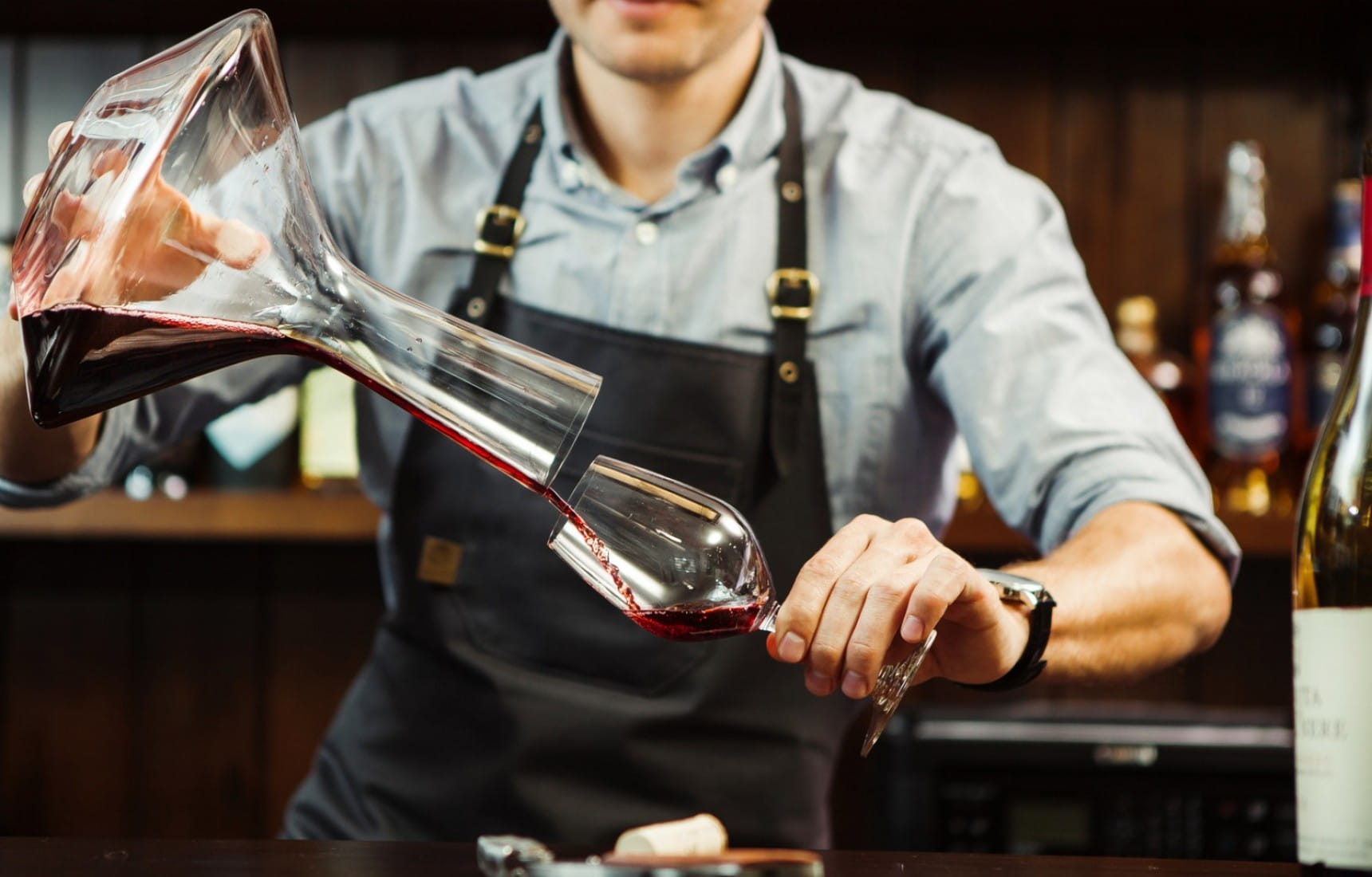
This is what most picture when they think of decanting. It involves pouring the wine slowly into the decanter. You can either hold the decanter in one hand and pour with the other or keep the decanter on a flat surface and pour the wine in. Either way, pouring slowly and without much splashing helps fragile, older wines maintain their structure, texture, and color.

It also allows the pourer to spot sediment. And the best way to do that is using only one hand to pour the wine into the decanter and applying a light source to the neck of the bottle as you pour. Keep a lit lighter or match beneath the neck of the bottle and start pouring very slowly when the bottle becomes parallel to the ground. Once the wine lighted by the flame appears dusty, cloudy, or you actually see bits of sediment, you’re done. The decanter doesn’t filter the sediment out. But the process of pouring the wine into the decanter allows you to see the sediment and avoid it. You may have seen sommeliers doing this; it’s one of the most noticeable sommelier responsibilities.

How to Decant Wine Without a Decanter

Wine doesn’t necessarily have to be in a decanter to be decanted. It’s the most effective way to decant wines, but there are other methods. Here is how to decant wine without a decanter.

Swish Your Wine Around In the Glass

Because wine glasses are designed to aerate wine, you can usually do a quick-and-dirty decant by pouring a standard wine pour in a glass, swishing it around a few times, and letting it breathe. For how long you let it breathe depends on the type of wine. That’s covered in the next section.

Use an Aerator

What does a wine aerator do? Well, a wine aerator is a wonderful little wine gadget that forces wine to interact with a pressurized stream of oxygen. It immediately aerates wine and, because of the force of the oxygen stream, also approximates a nice swishing. Aerators not only kickstart the oxidation process, but they also boost the evaporation process. They’re like turbo wine decanters.

Use a Blender

Blasphemy! Yes, this may seem insane. But it works well enough for relatively inexpensive bright, young red wines. Pour them in a blender, turn it on for 15–20 seconds, and you’re good to go. This is more similar to using an aerator than it is to using a decanter, because the movement of the blades accelerates evaporation must like an aerator’s pressurized oxygen. But it will still aerate wine like a decanter—in a pinch. It’s probably best to make this your Plan D.

How Long to Decant Wine

How long to decant wine depends on the type of decanting you’re doing. If you’re shock decanting, most of the benefits of take place instantly upon pouring the wine into the decanter and giving it a good swirl. Feel free to enjoy the wine after only a few minutes in the decanter, up to about 15–20 minutes. Longer than that isn’t really necessary. If you’re decanting older reds in the traditional manner, ideal decanting is anywhere from 30 minutes to 4 hours. 

Here’s a helpful list of wine types and how long to decant wine. It’s in line with what most people do. It’s based on regular decanting, not shock decanting. Feel free to experiment with the times, though! How long to decant wine is not set in stone, and the important part is that you end up with a wine you enjoy.

Do You Decant White Wine?

White wines don’t usually need to be decanted. And the same goes for rosé. Decanting can upset otherwise okay white wines. The only time to decant a white is if the wine smells off, like eggs or a burnt match. Then it’s okay to decant a white wine or a rosé for about 15 minutes.

When to Decant Wine

There are four main instances when to decant wine:

  1. Decant wine when enjoying an older red wine with sediment on the bottom so the sediment can be removed
  2. Decant younger red wines that need their tannic structure mellowed
  3. Decant (and this is rare) white wines and rosés that have been reduced, or have lost their original bouquet and flavor profile
  4. When you need to bring a red wine temperature up from its storage temperature to its serving temperature (see our wine storage guide for more details)

Why Decant Wine? 

Why use a wine decanter? Well, you should decant wine for a variety of reasons, five to be precise. We’ve already covered the primary two. Those are aeration and sediment removal. Here’s a breakdown of every purpose a decanter serves, no matter how uncommon that wine decanter purpose may be.

  1. Aeration. Either a shock decant or a normal decant will accelerate oxidation and evaporation, two chemical processes that enhance the desirable flavors and scents of wine.
  2. Sediment removal. As red wines mature, tannin molecules form into long chains and weigh themselves down to the bottom of the bottle forming sediment. Decanters help identify and avoid pouring them. If you have an old, tannic red, your decanter becomes your wine pourer.
  3. To correct reduced white wines. Some whites can smell of sulfur upon cracking them open with your corkscrew. A vigorous splash decant and 15 minutes in a decanter can temper that characteristic of their bouquet.
  4. To warm up wine. Some wines may come out of storage a few degrees below their recommended serving temperature. Which is why many wine collectors use dual-zone refrigerated wine storage cabinets. A few minutes in a decanter raises a wine’s temperature a few degrees.
  5. Because decanting is beautiful. Witnessing the economy of an expert decanter’s movements is impressive on its own. But the crystal and glass decanters being used are works of art themselves. And that’s to say nothing of the way the color of the wine shines through the vessel. The whole process is a wonderful expression of a rich and lively tradition. One which is covered on master sommelier exams and in most sommelier classes.

You know how and why to use a wine decanter. Now on to what is surely the most fun part of decanting: cleaning the decanter! 

How to Clean a Wine Decanter

Cleaning decanters is a challenge because of their shape and the fact that cleaning agents can stubbornly stick around and affect the next wine being decanted.

That’s why the best way to clean a wine decanter is to let heat and water do the work for you. Soak your decanter in warm to hot water, depending on the amount of wine stains. Once the wine stains have been loosened from the initial soak, rinse the decanter with warm water to know it all loose. Repeat rinsing until you’re satisfied.

If you have a particularly hard-to-reach area of your decanter, decanter cleaning beads may do the trick. They’re small stainless steel balls you had to your decanter and gentle swirl to scrape any stains and solids off the inner reaches of the decanter.

That’s Why We Decant

Very few things in this world are both lovely and useful. Decanting is one of those things. It helps wines become better versions of themselves, and it captures the lore and mystery of wine in just a few quick movements. It’s not just more wine tasting terms. Spend some time browsing the liquor store Avon, CO and you’ll probably fall in love with one. Some look like swans or ducks, and others like raindrops or French horns. Pick one up and see for yourself how it elevates every aspect of your wine experience. And even if you don’t use it, it’s a great display piece.

These Are The Best Glasses For Mojitos

These Are The Best Glasses For Mojitos

The Cuban-born Mojito, a favorite of Ernest Hemingway, saw its popularity soar in the early 2000s, decline soon thereafter, and now are back in vogue and ready for their next round in the spotlight. The beauty of this classic cocktail is they’re extremely easy to mix up, require few ingredients, and when done right, are absolutely refreshing on a warm afternoon.

Just as the Martini has its Martini glass, and the Gin & Tonic has a Gin & Tonic glass, it’s time for the Mojito to get the respect it deserves.

Best Mojito Glass

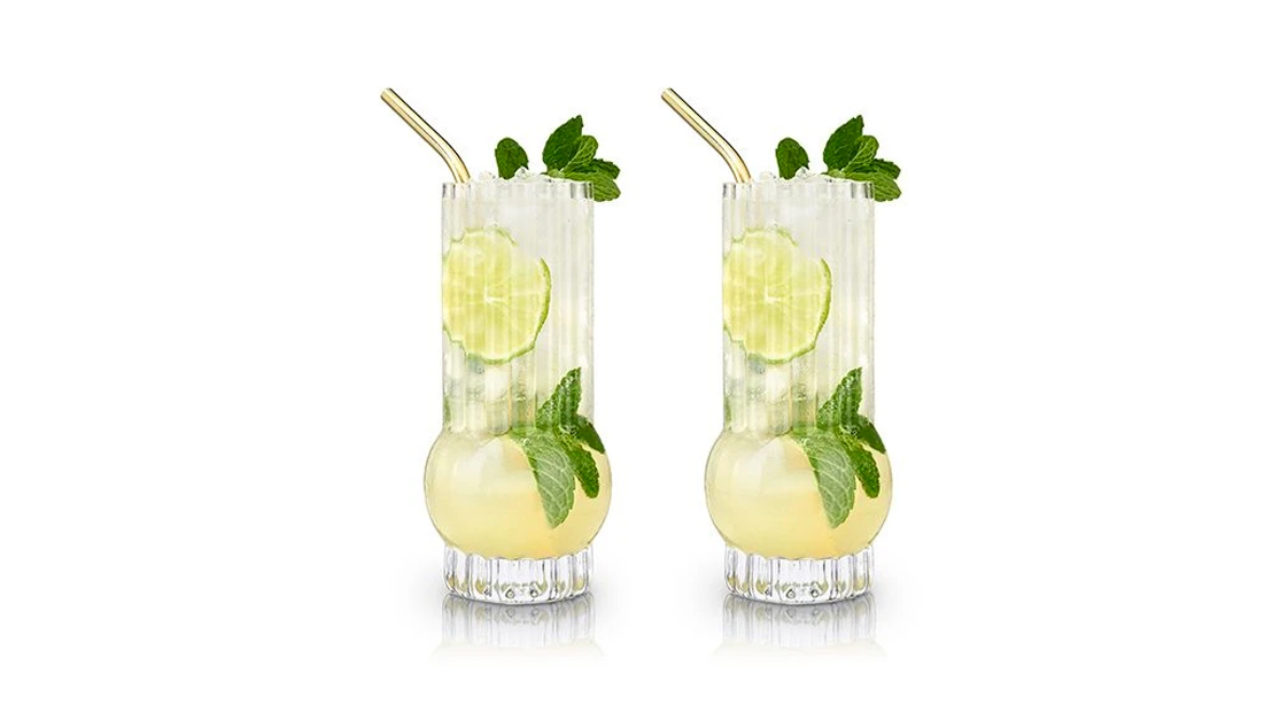
Inspired by the cocktail culture of the roaring 20s, this set of lead-free Crystal Mojito Cocktail Glasses will make you feel like you’re sipping cocktails with Jay Gatsby. The unique art deco-inspired design will comfortably hold 13 oz of your favorite mojito, but also will bring those fresh minty mojito aromatics to the forefront.

While it doesn’t compare to taking a trip back in time or getting on a plane to Havana, the glasses make a gorgeous addition to any bar and you’ll feel like royalty when you’re sipping out of them.

What are you waiting for? Visit Village Warehouse Wines and Spirits, an Avon, CO Liquor Store, to replenish your stash and enjoy more benefits! 

10 Things You Need to Know About Ketel One Vodka

10 Things You Need to Know About Ketel One Vodka

Cocktail-friendly Ketel One Vodka is a proudly Dutch operation. Made in the Netherlands for 11 generations, the distillery even has its own windmill!

It’s a cocktail-friendly spirit, and placed in the the top three when Avon, Colorado Liquor Store blind-tasted the best vodkas for Moscow Mules.

Curious to learn more? Here are 10 more facts you should know about Ketel One Vodka.

KETEL ONE IS THE PRODUCT OF OVER 300 YEARS OF DISTILLING EXPERIENCE.

Ketel One is distilled by the Nolet family in Schiedam, the Netherlands. The distillery was founded in 1691 by Joannes Nolet, and is currently managed by the 10th and 11th generations of Nolet distillers.

THE FAMILY ORIGINALLY DISTILLED JENEVER.

When Joannes Nolet founded the distillery, production was focused on jenever, a highly aromatic Dutch gin. The family didn’t start making its much more recognized vodka until the early 1980s.

THE KETEL ONE STORY BEGINS WITH 10TH GENERATION CAROLUS NOLET.

In 1979, Carolus Nolet took control of the family business. Keen to expand the distillery’s portfolio, Nolet traveled to the United States, where he discovered an emerging cocktail culture. Nolet was convinced that a high-quality vodka would succeed in the burgeoning market and returned to the Netherlands to create his own high-end spirit. Ketel One Vodka was released in 1983.

KETEL ONE VODKA IS NAMED AFTER THE DISTILLERY’S ORIGINAL COPPER POT STILL.

Dutch distillers refer to pot stills as ketels. When Carolus Nolet perfected his vodka recipe, he named it after the distillery’s oldest, coal-fired copper pot, Distilleerketel #1. A portion of the wheat spirit that makes up Ketel One is re-distilled in this pot, which also features on the bottles’ labels.

KETEL ONE UNDERGOES AN UNCONVENTIONAL DISTILLATION.

Distillers traditionally favor column distillation for vodka production, and pot stills for darker, richer spirits like single-malt Scotch or navy rum. The Nolet distillery utilizes both column and pot stills for Ketel One Vodka, a combination that Carolus Nolet Sr. believes produces a smoother flavor profile. (Pots are also favored in the production of gin, so it’s likely Nolet gained inspiration for the process from his family’s experience distilling jenever).

EACH BOTTLE IS PERSONALLY APPROVED BY THE NOLET FAMILY.

Each run of Ketel One Vodka must be personally tasted and approved by a member of the Nolet family before bottling begins.

THE NOLET FAMILY IS REALLY FOND OF WINDMILLS.

During the 18th century, Schiedam was home to nearly 400 working distilleries, so the enterprising, fifth-generation distiller Jacobus Nolet built a large windmill to process the town’s grain. The huge construction was named the Whale. In 2005, the Nolet family constructed another windmill, this time at its distillery site. De Nolet (also known as Noletmolen) was designed to look exactly like a traditional Dutch windmill, but it wasn’t just erected for aesthetic purposes. De Nolet houses a wind turbine and supplies roughly 20 percent of the distillery’s electricity.

TRADITION, MEET TECHNOLOGY.

During Ketel One production, the original pot stills are combined with computerized column distillation technology, providing a perfect harmony between tradition and technology. Across a canal from the distillery is Ketel One’s high-tech warehouse, where packaging, storage, and distribution take place.

Connecting these two buildings is the underground Nolet Tunnel, a recently completed engineering project that allows the automated transfer of finished cases to the warehouse, while bottles and supplies simultaneously head in the opposite direction.

KETEL ONE IS PART-OWNED BY DIAGEO.

In 2008, Diageo paid a reported $900 million to enter a 50-50 partnership with Ketel One. The joint venture granted Diageo exclusive global rights to sell, market, and distribute Ketel One. As part of the deal, the Nolet family maintained ownership of the brand rights, distillery, and, crucially, its secret distillation recipes.

KETEL ONE ADVERTISING IS LOW-KEY.

Ketel One didn’t begin advertising until 2003. Even then, its first campaign simply read, “Dear Ketel One Drinker Thank you.” Ensuing minimalist advertisements often contain nothing other than text written in Ketel One’s signature font.

Design a site like this with WordPress.com
Get started