It’s likely that you have a wine decanter sitting in your home, especially if you were recently married; yet you have no idea when or how you are supposed to use it. Or for that matter, why you even would.
Decant simply means to pour a wine from one vessel, its bottle, into another. While there are a lot of fancy decanters out there on the market, all you need is another empty container. We’ve played around with plastic pitchers, mason jars, even other empty bottles. They all do the job well, though they may not look as pretty.
The reason you decant a wine is to allow it to come in more contact with oxygen. As we discussed elsewhere, oxygen, during its initial contact with a wine can be very beneficial, enhancing a wine’s flavors and softening it.
Don’t let anyone tell you that you can only decant certain types of wine, any wine, both white and red, can be decanted. We decant all the time. There is hardly a wine that is worse from being decanted, so our rule is, if you want to decant a wine, do it, even if you are just decanting it because you think it looks prettier in the decanter.
Decanting is also a great trick to ensure a wine is more likely to please all of your guests. The contact the wine has with the air rounds out the wine and makes it more pleasing to most people’s taste buds, plus if you have a nice decanter, it looks pretty sitting on the table prior to being served. Remember we taste with our eyes as much as we do with our nose and tongues.
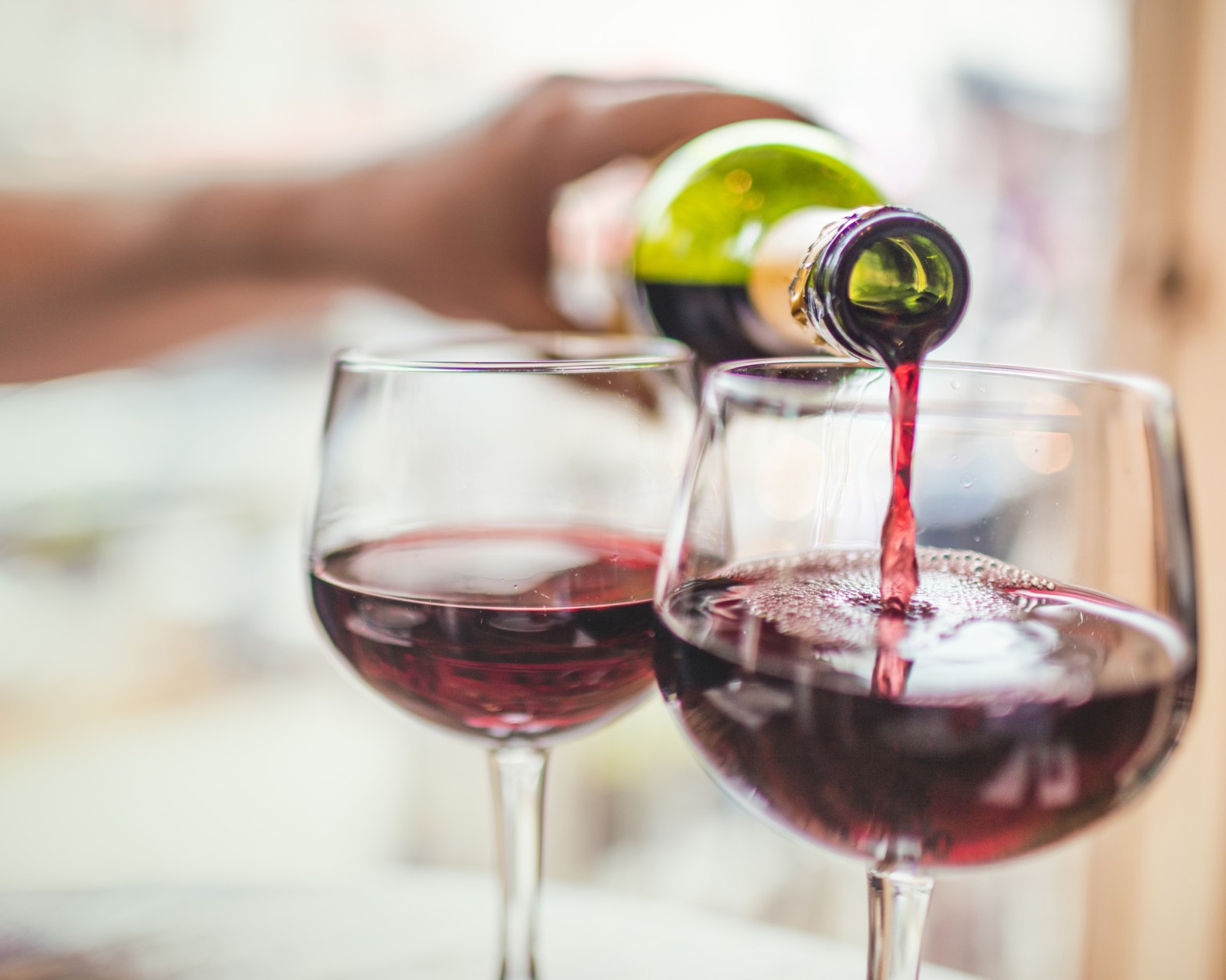
To decant a wine, pour the wine from its bottle into your decanting vessel 15 to 20 minutes before you want to serve it, and just let it sit, then serve.
Recently a lot of “hyperdecanting” wine aerators and gadgets have come onto the market claiming to achieve even better results than the traditional method. Nathan Myhrvold (yes that Nathan Myhrvold, the world’s leading patent troll!), the author of Modernist Cuisine even advocates pouring wine into a blender and blending it to force even more air into it, but at Avon, Colorado Liquor Store we think the classic method works best, plus it’s the most elegant way to serve. Happy decanting.
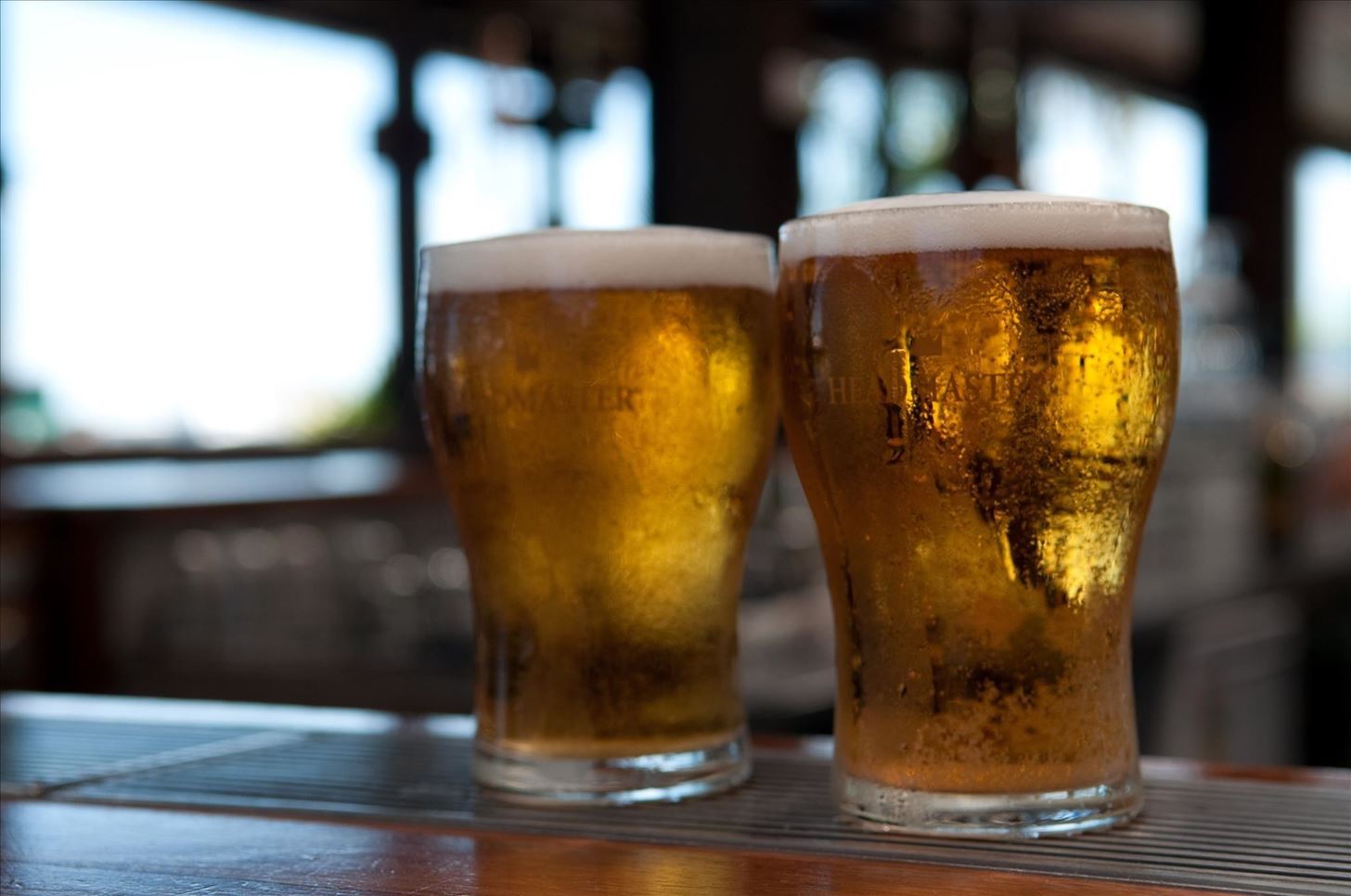
We are living in a golden age of craft beers. Originally invented by the ancient Egyptians, every culture now has its own tastes regarding beer. The process of making beer is so multi-faceted, it’s a miracle that any gets made at all.
However, there are lots of steps along the way that could quickly torpedo a beer’s chemical composition which, in turn, affect its taste. In order to bring out the best flavor in any beer, you need to know a few key pieces of information to truly savor beer like a connoisseur.
Drink Draft Beer from Clean Tap Lines
Most restaurants and bars keep their beer kegs far from the actual tap. The lines that get that beer to you, like any type of plumbing, need to be cleaned since beer and air sit in them when not in use (mostly at night and when the keg is kicked).
If not cleaned regularly, the lines can accumulate mold and bacteria, leading to sickness, or at least add a gnarly hangover. The good news is that beer from a dirty tap line will be easily detected by smell and taste. If your beer tastes/smells skunky, has a cabbage-y note, or an overly slick mouthful, you might want to stop drinking. Serious Eats has more on this here.
That’s why it’s important to know how often the tap lines are cleaned. Though health requirements vary around the country, the Brewers Association, a national organization that represents small and independent brewers, recommends that lines be cleaned once every two weeks.
If your nose or tongue tells you something’s up with your beer, simply ask the bartender or manager how often the lines are cleaned. As a general rule, if the establishment seems like it values cleanliness, then go ahead and drink with confidence. If you’re in a divier type place and don’t think that hygiene is big on the bar’s list of priorities, stick to bottles.
Avoid Green Beer Bottles!
Beer has three enemies. One is heat, the second is air, and the third is light. Heat is obviously bad for beer. A warm beer tastes like urine because heat changes the chemical composition of beer. With air, it not only allows the carbon dioxide to escape, thereby flattening the beer, it also causes the beer to oxidize and lose complexity, depth, and flavor. The last element is one that not many people think of: light. Why is light so bad for beer?
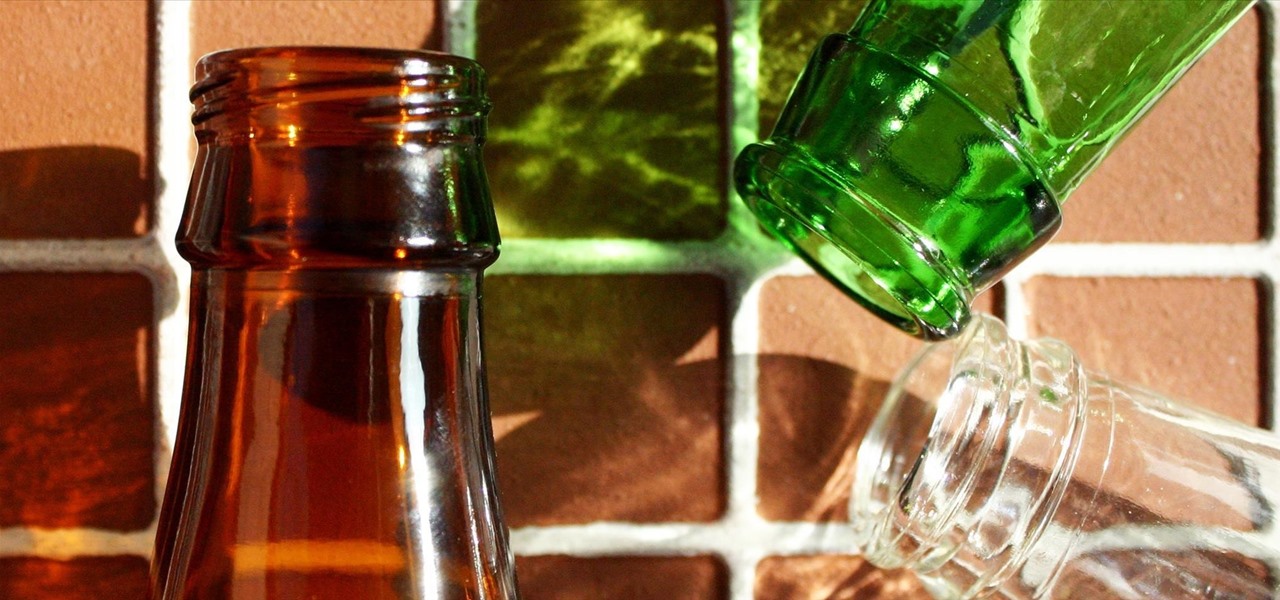
Professor Charles Danforth, the chair of the Food Science and Technology Department at UC-Davis, explains that isohumulones in the beer are sensitive to light. They are the bitter compounds in hops and break down quickly when exposed to light. As we know from tinted windows on cars, light travels easily through clear glass and has trouble getting through dark.
But over at Wired, they ran a simple experiment that shows how ultraviolet light makes it through green bottles. Dr. Eric Allain (of Appalachian State University and the Wired author’s brother-in-law) further explains that the UV light that makes it through creates 3-methyl-2-butene-1-thiol, also known as MBT in the beer. MBT gives off a nasty taste that has the same chemical component that skunks have. Hence the name, skunked or skunky beer.
Note the thicker shadow on the brown bottle. That’s less light to skunk your beer
Meanwhile, amber bottles were shown to block out the most UV light. It’s even better if you can pick up a six-pack where the cardboard carrier with very high sides, for the ultimate in light protection.
Canned Is Better
We’ve been conditioned to believe that canned beers are somehow less sophisticated then bottled beer, but there’s a growing movement, particularly among craft beer brewers, to bring back cans.
The attraction for brewers is aluminum’s ability to prevent light from getting in at all. In addition to not letting light in, cans are better sealed, which let in even less air than bottles.
Craft beers are bringing back cans to the masses!Image by iandavid
Cans are also better for the environment because they weigh less (so more beer can be transported on less trips) and grocers love them because they can be stacked more easily. So go ahead, crack open a can with pride! It’s good for you and the earth (and the quality of your beer).
At Village Warehouse Wines and Spirits, a nearby Avon, Colorado Liquor Store we strive to provide our clients with the best wines they crave every season. We definitely have all the best options for all your summer activities! See you at the shop!
Most people love drinking. It is an activity that adults can enjoy any time and for any reason. Some drink to celebrate a milestone, relax after a tiring week at work, or to reconnect with old friends. Whatever the case may be, people in these situations rarely say no to well-mixed, delicious drinks. From beer, to vodka, to rum, there are always different cocktail recipes that can be concocted to suit your taste buds.
One of those drinks that never go out of style is rum. Cocktails made with rum are some of the most well-loved alcoholic beverages. In fact, there are a lot of rum cocktail recipes that are so easy that you can mix them yourself. You and your friends no longer need to go to a bar to get your rum cocktail drinks.
What Is Good to Mix with Rum?
Here are some of the best rum mixers that are easily available for you to use:
Coca Cola
Rum coke is one of those staple highball rum cocktail recipes known to most bar goers. This rum cocktail drink has rich historical origins. It was created in Cuba and became popular in the 1900’s when bottled Coca Cola was first imported there. With how easy it was to make, its low cost, and the wide availability of its ingredients, it soon became a staple in that country and the world. All you have to do is to add a smaller amount of rum to a larger amount of Coca Cola and mix them together. Because of the widespread drinking of rum coke, Bacardi has called it the second most popular alcoholic drink in the world.
Orange Juice
Orange juice is another easy-to-source rum mixer. Adding orange juice to rum makes for tastier rum cocktails drinks that you can share with your family and friends. This mix is better if used with fresh orange juice. However, if that is scarce, you can also use powdered orange juice or another more readily available substitute. All you have to do is to put rum and orange juice at a 1:2.5 ratio for a better mix. If you want, you can also add a fresh slice of orange to make it even tastier.
Lemon Juice
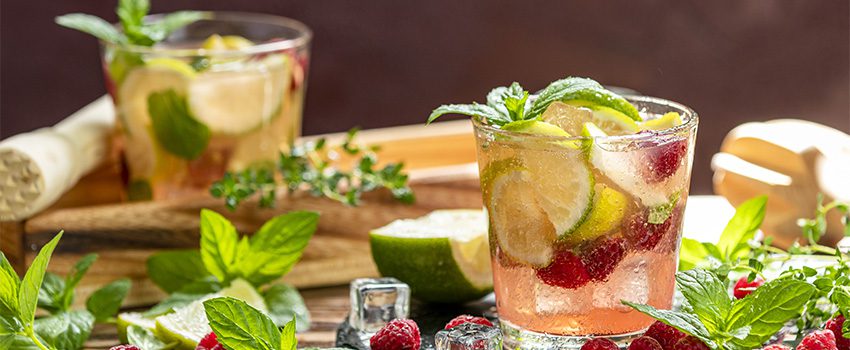
Lemon and lemon juice are among the most commonly used citrus ingredients in rum cocktail recipes. These are added to spice up the rum. You can easily mix rum with lemon juice to create simple rum cocktail drinks. If it’s summer and you want to create an interesting and refreshing drink for you and your friends, you can create rum lemonade. Prepare two shots of rum in a glass and then add about four oz of lemonade, four thin slices or lemon and a sizable portion of ice to make it refreshing.
Coconut Water
Adding coconut water to rum gives it that tropical flair for a smoother drinking experience. Make a mixture of rum and coconut water at a 2:4 ratio. For this drink, you might want to use vanilla infused rum to add more flavor. Additionally, if you are looking for health benefits in your rum cocktail drinks, adding coconut water would be the best thing to do. Coconut water is super hydrating, full of potassium, and contains electrolytes that can help in reducing your hangover.
You can never go wrong with rum. It’s the kind of alcohol that you can easily mix with other beverages to create more interesting cocktails. Experiment with these rum cocktail recipes at your next hangout with friends or family get-together. Visit Village Warehouse Wines and Spirits, an Avon, Colorado liquor store for your beverage needs! We have a wide selection of rum flavors so you can find the ones that suit any and every occasion!
6 Best Alternatives for Red and White Cooking Wines
If you are preparing for dinner and realize you do not have the cooking wine on hand that your dish is calling for, don’t be so quick to dismiss that recipe! There are several alternatives for red or white wine for cooking, and you probably have them in your kitchen!
We use wine for cooking to add acidity, color, flavor, or sugar to a dish. It can also deglaze a frying pan, provide moisture, or tenderize meat. Knowing the function of wine in your recipe will be helpful in choosing the best substitute. Here’s a good list of what to use instead, when a recipe calls for wine.
1. Red and White Wine Vinegar
Vinegar is a staple in every home’s kitchen! It consists of acetic acid and water, as well as other compounds present in wine. This can also be produced from coconut water, apple cider, malt, or rice.
A red or white wine vinegar makes an excellent cooking wine substitute! Both produce flavors that are very similar to wine. Don’t worry about the vinegar, as it will not affect the taste of your dish. However, wine vinegar is more acidic than regular wine. Dilution may be necessary before adding any to your recipe. You can mix water and wine vinegar at a 1:1 ratio.
Wine vinegar is most useful for liquid-based recipes, including marinades and salad dressings.
Red wine vinegar is perfect for beef, pork, and vegetables, while white wine vinegar works better with fish and chicken.
Wine vinegar also contains trace amounts of alcohol, which is further reduced with cooking. However, if your diet restricts alcohol, you should avoid wine vinegar.
2. Pomegranate Juice
Who does not enjoy this rich, flavorful juice? Pomegranate is fairly acidic and is great at boosting the flavor of just about any dish!
It is the best substitute for red wine in cooking because they have comparable acidity, aroma, and flavor. If you want a stronger taste, you can add a tablespoon of vinegar. This works best with salad dressings and sauces. You can also use it in a glaze for vegetables.
Pomegranate juice does not just add flavor to your favorite recipes; it also contains antioxidants, which are helpful in lowering your blood pressure and risk of heart disease.
3. Ginger Ale
If you do not have white wine for cooking, look for ginger ale in your kitchen! This carbonated soft drink, flavored with ginger, makes an excellent meat tenderizer. You can use the same amount of ginger ale as you would white wine. However, though they have the same dry and sweet tastes, this is best used in recipes that require a slight ginger flavor.
4. Cranberry Juice
Cranberry juice, a tart beverage, is yet another excellent substitute for red wine in cooking. Since this juice is already sweet on its own, it is best used in dishes that do not call for more sugar. Otherwise, the dish may taste sweeter than expected.
You can reduce the sweetness of the juice by mixing it with a tablespoon of vinegar before adding it to the recipe.
Cranberry juice is also very healthy! It can help prevent urinary tract infections. It also contains high amounts of antioxidants that fight disease-causing inflammation.
5. Beef, Chicken, or Vegetable Stock
Did you know that the broth or stock you use in sauces and soups also makes a great cooking wine substitute?
A broth is made by simmering meat, seafood, or vegetables in water. Herbs and spices are often added to increase its flavor. Generally, a broth or a stock is used to tenderize and simmer meat. These are the same functions of wines in cooking, hence a good non-alcoholic substitute!
The beef broth has a deeper color and flavor, making it a good substitute for red wine in cooking. Chicken and vegetable broths, on the other hand, are better for white wine dishes.
You can replace wine with the stock at an equal ratio. However, remember that stock is savory and less acidic. It may produce a milder flavor compared to wine. If you need that extra flavor, add a tablespoon of vinegar for every cup of stock in the recipe.
These are just some of the best non-alcoholic ingredients you can use as cooking wine substitutes. Some may replace wine equally in recipes, while others may require other ingredients for additional flavoring.
However, if you want to keep the original flavor when making that perfect dish, you can always run to a nearby grocery or liquor store. Are you looking for a Avon, Colorado Liquor Store? Village Warehouse Wines and Spirits is just a few minutes away!
Which red wine goes well with prime rib, roast tenderloin, or beef stew? Find out here.
Pairing Beef with Red Wine
Winter is the season when you might be considering prime rib, roast tenderloin, or another special beef recipe for a holiday dinner. Or maybe the cold weather has you craving a long-simmering beef stew. And most likely, you’ll be thinking of serving red wine with that beef. But which red? There are definitely some that work better than others, depending on the dish, but the good news is that you have plenty of flexibility. Here’s how to make great matches.
Tannins and protein, a mutual attraction
Red wine tastes good with beef because of the interplay between the tannins in the wine and the protein in the meat. Tannins are compounds found in all red wines, and they come mostly from the grapes’ skins and seeds, as well as from the barrels in which the wine was aged. They give red wine aging potential and are an essential part of a wine’s structure and balance.
By itself, a tannic wine can feel rough and astringent (imagine tea steeped too long). But as soon as tannins become bound to protein, everything changes. A glass of young, tannic Cabernet Sauvignon isn’t the greatest choice to linger over before dinner, but take a sip after a bite of seared filet, and you’ve got a mouthwatering combination.
When serving an older vintage, keep the dish as simple as possible (think roast tenderloin) to avoid overwhelming the wine.
Grilled meat can handle brawny wine
The cut of meat and its flavoring can have more of an impact on the pairing than does the cooking method. But grilled beef is an exception—it’s different from seared or roasted meat because it packs more intense flavor. Balance the grill’s intensity by serving a rich, tannic red. There are lots to choose from: Australian Shiraz and California Zinfandel are two of my favorites, especially with a grilled New York strip.
Stay away from sweet or fruity flavorings with beef—their sweetness will flatten the flavors of a dry red wine.
Let the cut of meat guide you
Leaner cuts like filet do best with aged reds or wines that are less tannic. Richer cuts with a higher fat content, like a rib-eye steak, can stand up to a more concentrated and tannic red.
Roast tenderloin is a lean cut, so it’s a perfect companion for a red whose tannins have softened a bit from aging. Bordeaux is a great choice, as are Cabernet Sauvignon and Merlot from California or Australia. And don’t overlook Spain or Italy.
• Hawk Crest Cabernet Sauvignon, California • El Coto “Coto de Imaz” Reserva Rioja, Spain • Melini “La Selvanella” Chianti Classico, Italy • Château au Pont de Guitres, Lalande de Pomerol, Bordeaux
Prime rib is richer, and it’s delicious served with a younger or more tannic Barbera or Cabernet-based wine or a more robust Merlot, Bordeaux, or Bordeaux-style blend.
• Hess Select Cabernet Sauvignon, California • Revello Barbera d’Alba • Casa Lapostolle Merlot “Cuvee Alexandre,” Chile • Château Pontet-Canet, Pauillac
Pan-seared filet is great paired with a moderately tannic red like Merlot or a medium- weight Australian Shiraz. The fruit in these wines is lovely with the filet’s browned, caramelized crust, and their tannins won’t overwhelm a lean cut of meat.
• Blackstone Merlot, California • d’Arenberg Shiraz “Footbolt,” McLaren Vale, Australia • Columbia Valley Seven Hills Merlot, Washington
Brisket, short ribs and other stew meats are usually cooked slowly for a long time. The sinewy cuts break down and take on big, rich flavor. I like Rhône blends —the robust tannins, herbal notes, and earthiness of young Grenache-based wines like Châteauneuf du Pape and Gigondas work beautifully with the rich flavors.
You can visit Village Warehouse Wine and Spirits, a nearby Vail, Colorado Liquor Store anytime if you wish to try new varieties for your next celebration.
For decades now, wine has been categorised as an opulent accompaniment to any gathering or soirée. The luxe beverage offers an array of options to suit one’s palate and personality which makes it an ideal choice while entertaining at home. Consumption of wine is known to have a couple of prerequisites like food pairings or even glass pairings to elevate its experience.
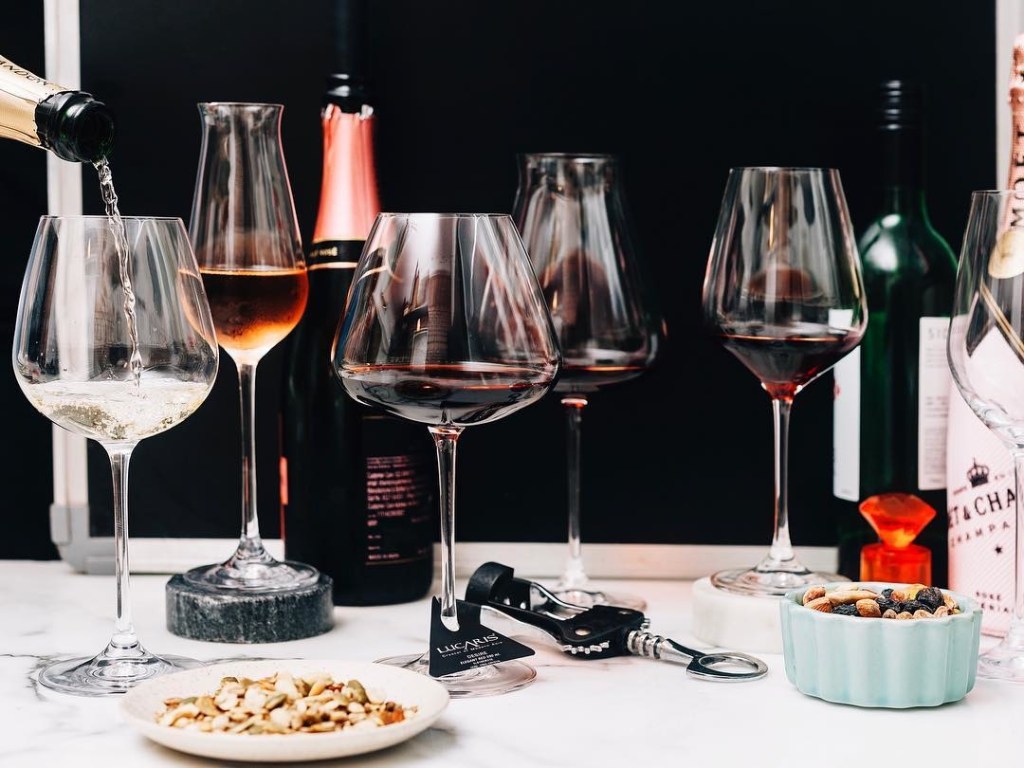
The wine glass is an important vessel to ensure you are getting the best experience a wine has to offer. Understanding how a wine glass can mould the taste of wine can be of huge benefit to maximise the taste. It all comes down to the two main parts of a wine glass, the bowl and the stem that influence tastes on the palate. Wine glass bowls come in many different shapes and sizes, which impact how well the wine can breathe as well as which taste buds the wine touches first. The stem allows you to elegantly hold the glass without heating up your wine.
LUCARIS has offered the unique shape, designed with the finest rims, to ensure that LUCARIS wine glasses deliver the best sensory accompaniment to your wine. A perfectly laid out dinner party begins with the bubbly welcome of a champagne or sparkling wine that should be served in the tulip share of Desire Sparkling, letting you sense the aroma upon your first sip and keep the bubbles on the tip of your tongue. Moving on to the three-course meal setting, a crisp or full-bodied white wine like oak-aged Chardonnay, Viognier including White Rioja to complement the soup course and entrees, is to be offered in the Desire Crisp White or Desire Rich White.
The right crystal glassware can enhance the entire dining and wining experience of the evening.
Decanting your usual wine favorites is a great way to experiment with different tastes and flavors. You can visit Village Warehouse Wine and Spirits, a nearby liquor store Vail, CO anytime if you wish to try new varieties for your next celebration. Happy drinking!
Mead—a sweet alcoholic drink made by fermenting honey and other ingredients—will not be safe in most cases if you can’t have gluten, especially if you’re particularly sensitive to trace gluten. Mead is frequently made with gluten-containing ingredients such as barley and barley malt or with ingredients and/or processes that carry a high risk of gluten cross-contamination.
Still, there are exceptions to this rule that might allow you to enjoy this drink. There are important questions to ask before tasting it.
What Is Mead?
Mead, also called “honey-wine,” is one of the oldest known alcoholic beverages, and it has a storied history. Archeologists have traced the earliest known brewing of mead to China in the 7th century BC, although some historians believe it likely dates to far before that—all the way back to humanity’s roots in Africa.
Ancient Greeks called mead “ambrosia,” as in “ambrosia of the gods,” and some believed that drinking ambrosia could bestow mortality. Later, Vikings embraced mead, believing it gave them wisdom and could turn people into scholars, poets, or teachers. The Norse god Odin supposedly gained his strength from suckling mead when he was a baby.
Mead fell out of fashion in colonial times, when colonists and then new Americans drank mainly beer, cider, wine, and rum (sourced from the Caribbean). But these days, mead has been making a comeback and has become a somewhat trendy beverage. Boutique meaderies brew their own mead, hold tastings, and bottle mead for sale off-site.
Mead Can Contain Gluten
Traditionally, mead is made with honey, water, and wild yeast.1 In ancient times, wild yeast spores would blow onto water trapped in overturned beehives and start the fermentation process without the need for human intervention. Some historians speculate that ancient humans first discovered mead—and possibly even intoxication—by drinking the liquid they found sitting in an overturned beehive.
These days, you’re much more likely to drink mead from a glass or a bottle than from an overturned beehive. Modern mead is made by combining honey, water, some type of yeast, and possibly other ingredients, and then allowing the fermentation process to proceed.
Sadly for those who have celiac disease or non-celiac gluten sensitivity, modern mead often is made using gluten-containing ingredients or processes that have a high risk of gluten cross-contamination. These ingredients and processes can take several forms.
Barley. Some mead is brewed with barley or barley malt, creating a beverage that’s most often known as “barley mead” but also can be called “barm.” Since barley is one of the three gluten grains (which are wheat, barley, and rye), including barley or barley malt in mead obviously places the drink off-limits if you can’t have gluten.
Brewer’s yeast. Even if the mead in question isn’t made with barley, it still may contain traces of barley that come from using brewer’s yeast to spark the fermentation process. Plain yeast is gluten-free—yeast is a one-cell microorganism that grows on honey and any other form of sugar, converting the sugar to alcohol and carbon dioxide. But brewer’s yeast is a byproduct of the beer-brewing industry and contains gluten (in the form of barley) from that process. It’s possible that mead made with honey, water, and brewer’s yeast would be low in gluten, and perhaps would be low enough in gluten that most people wouldn’t react. However, it’s still risky.
Used casks or barrels. Many meaderies utilize casks or barrels to age their mead, and they often prefer casks or barrels that already have been used to contain beer, whiskey, or bourbon. These barrels can introduce gluten cross-contamination, although the cross-contamination is likely to be at a very low level.
Mead is safe to drink on the gluten-free diet if it’s made with wine yeast (not brewer’s yeast) and if it hasn’t been aged in a barrel or cask that previously was used to hold beer, whiskey, or bourbon. Unfortunately, only a small percentage of mead brews will match up with these standards.
Some meaderies also add fruit or herbs to their brews. In most cases, these will be gluten-free, but you’ll need to check with the individual establishment to make certain.
A Word From Experts:
If you’re interested in trying mead, you’ll need to ask the meadery the following questions:
Do you use barley to make your mead?
Do you use brewer’s yeast to make your mead?
Do you use beer, bourbon, or whiskey barrels to age your mead?
If the answer to all three questions is “no,” the mead should be safe on the gluten-free diet. Otherwise, you may just want to stick with gluten-free hard cider or gluten-free beer.
If you’re sensitive to traces of gluten, ask liquor store Vail, CO how their products are made or purchase certified gluten-free varieties. For more information drop your comments in the comment section.
For most wine drinkers, vino is part of a lifestyle, one that includes many other factors influencing health. This creates a challenge for scientists interested in the relationship of wine to anti-aging and its effects on fitness.
It’s well known for example that wine drinkers tend to be of higher socioeconomic status, better educated, and exercise more. But the origins of the Mediterranean diet, which revealed the French paradox, are from comparatively poor and rural populations, suggesting that it is the wine rather than the lifestyle. What do we know about healthy drinking and healthy living today?
Fewer people now drink wine in the purely traditional way today, at least as defined by the Mediterranean way of living. For many people wine is now an aspirational status symbol. One recent analysis of alcohol consumption patterns found that wine drinkers tended to use it as a source of “cultural capital” and a means of distinction, whereas those who preferred beer and spirits associated their alcohol consumption with having fun in social settings.
The same is true for binge drinkers, especially younger age groups; wine is 5 times less likely than beer or spirits to be the beverage of choice for episodes of excess consumption in young adults. These patterns relate wine to both higher economic mobility and healthy behaviors.
Wine, at least of decent quality, probably costs more than other drinks at similar levels of total alcohol consumption, which could partly explain the linkage of wine to socioeconomic status. Increasing the minimum price for alcohol by raising taxes has been explored as a public health strategy, leveraging this connection in order to lessen alcohol intake.
Some years ago the country of Finland undertook a social experiment in which they initiated a long term policy of escalating minimum alcohol prices. Correlating death rates from alcohol-related causes to various factors including price, they found evidence supporting the policy only among those with less education, and primarily for beer and spirits drinkers.
Among the most highly educated there were no associations between the minimum prices of any beverages and mortality, and no evidence of an association between higher minimum prices for wine and rates of alcohol-related mortality in any of the population sub-groups. So wine worked for all socioeconomic levels, but was mostly linked to those already preferring wine.
The way I see it, the degree to which wine is healthful because of its biochemical alchemy and how much is due to its association with healthy living is not all that important. What IS important however is how we drink, how we integrate wine appreciation into the enjoyment of a fulfilling life.
Let us help you and your guests have the best time at your next get-together. We make it fun and stress-free to pick wines, beers, and spirits that are perfect for your event. Start browsing our extensive selection of wine, liquor, and spirits online and know why we are considered by many as the best liquor store in Vail, Colorado. If you are in the Vail area, stop by our shop and meet our helpful staff.
Natural wines, made without additives and from organically grown grapes, should be healthier, right? Scientifically, it’s harder to prove than you might think, and it is possible that some manipulated wines may actually have benefits. To be clear, I am not here to defend the use of additives such as “Mega Purple” especially when they are used to hide deficiencies in bulk production wines, but in the interest of science I try to keep an open mind.
Native vs. commercial yeasts
Though there are no universally observed definitions of natural wine, it is usually agreed that they should be fermented on native yeasts rather than inoculated with commercial strains. There isn’t much published on the composition of wines fermented on native yeasts, but there is an interesting study from Spain suggesting that the choice of yeast used in fermentation affects the diversity of natural strains in the surrounding vineyards.[1] Looking at ancient vineyards managed with organic practices, the results were opposite of what you might expect: the commercial yeast had no effect, while native yeasts reduced diversity. Conventionally managed vineyards actually had higher biodiversity.
Mega Purple
If there is an additive emblematic of the controversies of commercial wine production, it is certainly Mega Purple. Andy Perdue called it “an insidious additive that can ruin wine.” Made from a highly pigmented grape called Rubired, Mega Purple is a concentrate that adds depth of color to wine, increasing the perception of quality. No one admits to using it, but sales are reportedly robust. I will leave the question of its impact on quality to the pros, but in terms of Mega Purple’s effects on health I think it is possibly a plus. Why? Mega Purple is essentially a purified dose of anthocyanins, the antioxidant polyphenols to which many of the health benefits of wine are attributed. Without specific data though, we can’t really say whether it is a good thing in terms of health effects or not.
Oak is no joke
Neil Shay Ph.D., Professor of Food and Nutrition Science at Oregon State University, has been investigating oak molecules found in barrel aged wine. He has found impressive properties, including for example a study where he observed that they counter the adverse effects of a high fat diet in an animal model. Where does one get the material to do such a study? Look for a “finishing and cellaring” tannin in your winemaker’s supply catalogue, where you’ll find 100% toasted French oak in powder form, intended to be added as a shortcut to time in expensive barrels.
A funny thing about a fungicide
Copper sulfate, sometimes called Bluestone, has long been used as a natural fungicide in vineyards. (Combine it with calcium hydroxide and you have “Bordeaux mixture.”) It has been largely replaced with a fungicide called Tebuconazole, which although considered safe by the U.S. Food and Drug Administration, is listed by the World Health Organization as “slightly hazardous.” A study from the Czech Republic suggests that Tebuconazole actually preserves the antioxidant properties of resveratrol, by preventing it from binding with copper.
Where next?
The more than 70 approved wine additives are just the start. Ozone (improves aromatics), pulsed electric fields (better extraction of phenolics), bioengineered yeast (reduces biogenic amines that cause headaches and allergies) and a range of treatments are available. Ultimately the best test is a clinical trial, and I have found only one: Comparing natural and conventional wines standardized to the same alcohol intake, a triple blinded study found that blood alcohol levels reached a higher and earlier peak with the conventional wines. This was attributed to different amino acids and antioxidants, though the exact reason was not known for certain.
Start browsing our extensive selection of wine, liquor, and spirits online and know why we are considered by many as the best Vail, CO Liquor Store. If you are in the Avon area, stop by our shop and meet our helpful staff.
Fresh breath, a strong heart, immunity…who knew that consuming beer, wine, and other liquors could give you a healthy advantage?
Alcohol’s biggest benefits are well known and well-studied: A glass of wine a day can cut your risk of cardiovascular disease and even help you live longer, and resveratrol-vino’s touted antioxidant-has power health perks. But the benefits of tippling-in moderation!-go far beyond heart health, longevity, and red wine. In fact, a drink here and there-be it beer, liquor, or white wine-can do everything from strengthen your brain to keep colds at bay.
B Is for Beer and B Vitamins
There’s nothing quite as refreshing as a cold beer on a steamy summer day. But beers shouldn’t always be slammed as empty calories. Researchers suspect this is because of the base materials used (like barley and hops) and the differences in processing the drinks.
Booze Can Be Kind to Your Kidneys
A study found that while drinking sugary drinks was linked to an increased risk of developing kidney stones (by between 23 and 33 percent), drinking beer and wine was actually linked to a lower risk-about 41 and 31 percent lower, respectively, the research found. And while these are just associations, this suggests that a beer (key thing here: one beer) could win out over a soda at that post-work dinner!
Vodka Is a Germ-Killing Mouthwash Substitute
Remember the old ad, “Smirnoff leaves you breathless”? Turns out there’s some truth to that. If you find yourself out of mouthwash, you could do worse than gargling with a couple ounces of vodka. “The high percentage of alcohol in vodka has antibacterial qualities,” says Renee McGregor, R.D. and author of Training Food. Vodka kills the nasty smelling germs, and if you want to kick it up a notch, add some cloves, mint, or cinnamon to the hooch for extra freshness. But save the pricey Grey Goose for your martini. Inexpensive, off-brand vodkas will do the trick fine.
Vodka Cranberry Is a Brain-Boosting Super Drink
Okay, maybe not. But a recent study published in the journal Consciousness and Cognition suggests that the moderately inebriated may have an edge when it comes to creative problem solving. The research found that young men fed vodka cranberries until they had a blood alcohol level of .075 solved more creative problem tasks in less time than their sober counterparts.
A Little Wine May Keep a Cold at Bay
While heavy drinking can take a serious toll on your immune system, putting you at a higher risk of disease and sickness, in moderation, a little booze could help you put up a fight, finds recent research from Oregon Health & Science University. The study was done in rhesus macaques-monkeys that have an immune system very similar to humans-and the researchers expect for results to translate to humans. The key finding: Monkeys who overdid it saw a decreased immune response.
Some Cider Is Packed with Antioxidants
Hard apple cider can be an effervescent and tangy alternative to beer and wine. The beverage, which is experiencing a renaissance in popularity in the U.S., also has some unique health benefits. “Apples have a high composition of the polyphenol antioxidants essential for good health; studies have demonstrated that these antioxidants are still abundant even when apples are made into cider,” says McGregor.
Fernet-Branca Aids Digestion
Fernet-Branca-the bitter Italian liqueur concocted from a centuries-old family recipe-is a drink of choice among chefs, bartenders, and cocktail aficionados. While even fans of the digestif admit that it’s an acquired taste, they virtually all swear by the potable’s medicinal magic. The complete list of its 27 herbs remains a secret, but the company’s website does reveal some ingredients, and McGregor says they may indeed have some tonic effects. “The mix of herbs, particularly cardamom, camomile, and saffron, is known to aid with digestion.”
Red for the Win
If you have a choice, drinking red wine may be even healthier than white-but for more reasons that just the heart health perks! Village Warehouse Wines and Spirits offers a wide range of vodka drinks. If you are looking for a nearby liquor store Avon, CO, we’re just a few minutes’ drive away. Stop by our shop and take a look at our top brands!









 Paul Williams