Rose wine has been “trending” in the past few years, thanks to millennials and instagram. The positives of that trend is we are seeing more brands available, better quality wines and better price points! The negatives are per usual; more choices that aren’t always great quality, odd styles that are unexpected and the favorite brands are sold out quickly for the year! Check out your nearby liquor store in Avon, Colorado and ask the staff over there if rose wine is available or not.
Rose in January? Isn’t it a “summer” wine? Some of my very favorite wines are Rose! Of course many roses are styled to be the best in summer…crispy, bright, light and acidic for the hottest days. Others are quite a bit more versatile; bolder, rounder and fuller body makes them a great choice all year! These Roses are also lovely for lighter meals, brunches and rich cheeses!
Pink wine? OK this is the deal…..all wine grape juice is WHITE! It is only when the juice comes into contact with the grape skins that the wine turns to red. In the case of Rose, the skins are left in contact with the juice for a very short time. Viola!
I only drink….. Honestly, we can learn to appreciate many things in life! If you end up hating the wine you’re with, here are a few ideas to use it up. Freeze cubes to add to sauces & soup bases. Cook pasta in wine. Poach fish or chicken in wine. Garlic makes everything taste better (so does Vodka). De-glaze a pan with it (perfect for caramelized onions) and make a pan gravy to serve on meats. Make a slushie and add additional fruit and spirits to it. The options are vast. Take a chance, think outside the box, you might like it……Cheers!
In one of the introductory lessons of WSET’s Level 2 Award in Spirits, we learn that a distiller’s first job is to produce a sugary liquid from raw materials. This sugary liquid is then fermented to create alcohol, which can then be concentrated into a spirit through distillation.
When a distiller works with fruits, especially grapes, obtaining this sugary liquid only requires a few steps because ripe fruit naturally has sugar-rich, juicy flesh. (The relative simplicity of the process is one of the reasons we tend to teach fruit spirits first in our spirits qualifications.)
Fermenting grape juice creates wine. And, the popularity of wine as an alcoholic beverage for thousands of years meant that, at the advent of distilling, wine would have been one of the most common alcoholic beverages to be distilled into a spirit.
The Dutch called this spirit, obtained from heating wine in the distillation process, ‘brandewijn’, a shortened version of ‘gebrande wijn’ – literally “burned wine”. It is from this Dutch word ‘brandewijn’ that the English word ‘brandy’ originates.
Types of brandy
If you’re new to brandy, it might seem daunting or confusing. It doesn’t help that the brandies you might see most frequently don’t label themselves as such. This includes some of the best-known brandies in the world – Cognac, Armagnac and Calvados – all produced in France and often seen as the global benchmark for brandy.
Cognac
Cognac is by far the best-known brandy of all and, while there are many producers, a small number of very well-known international brands dominate. These brandies must be produced within the Cognac region, just north of Bordeaux, and matured in oak barrels. The various houses have nuances in the styles they produce, but generally young Cognacs will have light and lively fruit and floral aromas, with the influence of oak increasing in older examples, along with mature aromas and flavours of dried fruits.
Armagnac
Armagnac is another production area in France renowned for high-quality brandies. Unlike in Cognac, small producers tend to dominate. Differences in the way these brandies are produced generally mean Armagnacs having bolder, more complex aromas and flavours compared with Cognacs. For example, in Armagnac, brandies don’t have to be matured in oak barrels, so you’ll find clear brandies from the region with no oak aromas, emphasising their fruit and floral aromas instead.
Calvados
France’s famous apple brandy, known as Calvados, is made in production regions particularly well-suited to growing apples in Normandy, northern France. Because Calvados is usually produced in very large oak vessels, oak influence is minimised and apple brandies will retain pronounced aromas of apple, even after long ageing. There are many other fruit brandies that you should seek out and taste to expand your understanding of the category.
Grappa
Italy is famous for grappa – a pomace brandy made with the skins of grapes that are discarded by winemakers. The pomace from black grapes includes some alcohol. This is because black grape skins give red wines their colour and need to be included in the fermentation. Therefore, black grape pomace can be distilled directly. Typically, white grape pomace does not include alcohol as it is discarded before fermentation. However, it does still contain some sugars. By adding water, the distiller can produce a sugary liquid that can be fermented and then distilled.
Italy’s grappas are rarely matured in oak, so they showcase the varietal characteristics of the grapes used to produce them, as well as pronounced herbaceous flavours from the pomace.
Pisco
One other type of brandy, produced in Chile and Peru, is called pisco. These are pot-distilled brandies made from highly aromatic grapes, especially from the Muscat family of grape varieties. Most examples of pisco are not aged in wood so as to preserve the natural aromatics of the grapes used to produce them.
You can visit a Avon, CO liquor store and check out different types of brandy and choose the one that suits you the best.
Some people plan such endeavours with tactical aplomb, paying attention to little hints dropped all year long by their nearest and dearest. They spread their purchases over weeks if not months and thoughtfully gather stocking fillers. Then there are the rest of us, the perennial procrastinators, who leave things until the last possible moment, frantically purchasing anything that we come across and crossing our fingers that it will seem heartfelt and carefully considered.
If you are thinking of buying a gift for someone who loves spirits, you could just pop to the local liquor store in Avon, CO and grab the first bottle you come across. It may be well-received, and it will be an improvement on a wittily inscribed shot glass or some nondescript bar towels.
To alleviate some of the stress, we have come up with a few suggestions that will show the spirits lovers in your life that you really care!
1. A little light reading
In the age of information there has never been such a wealth of literature available on spirits, cocktails and drinking in general. From the pithy to the academic, there is a tome to suit all types. A couple of my favourites from this year are:
From Barley to Blarney: A Whiskey Lovers Guide to Ireland – a great book capitalising on the recent renaissance of Irish Whiskey
Drunk in China – a dive into the wonderful world of Baijiu – whilst Baijiu is huge in China, it has been relatively hard to find further afield but that is changing. Get ready to start seeing it on more and more back bars in the future.
2. For the DIY lover
There is a never-ending supply of barware available for the spirit lover who likes to entertain or just fix themselves a drink at the end of the day. Companies like Cocktail Kingdom and Bar Stuff have pretty much everything you could think of in the way of accessories – jiggers and shakers, bar-spoons and ice ball makers. Better still, they ship all over the world! The best part of a gift like this is that you might even be offered a well-crafted Christmas cocktail for your trouble!
3. Take a trip
Visiting a distillery or spirits region used to require a decent amount of preparation and a fairly large budget. Scotland, France and the Americas all have some pretty iconic production areas and, if you can, you should definitely plan a trip! However, the explosion of craft distilleries around the world over the last decade means that it is now relatively easy to find a distillery within a stone’s throw from most major cities.
Many of them welcome visitors and you can generally get a far more personalised experience than with some of the larger operations. It isn’t unusual for the distiller him/herself to give you the tour in person.
It’s a great opportunity to give a spirits enthusiast the chance to find out first-hand how spirits are made. You may even be able to give them a ‘hands-on’ experience, with many craft distilleries offering labelling and blending experiences.
4. The gift of knowledge
Finally, what better way to say you care than to sign up your friend or loved one for a spirits course. The Wine & Spirit Education Trust’s (WSET) spirits courses provide the perfect opportunity to learn how to taste like a pro and find out what’s really in your glass. With options ranging from introductory one day courses to advanced-level deep dives, there is a level to suit everyone – from the novice to the connoisseur. Better yet, sign yourself up too and share the experience!
Your sweetheart and some booze are all you need for celebrating February 14 properly. To buy quality liquor reach out to your local liquor store in Avon, Colorado. With recipes ranging from the sweet-and-spicy Hot Blooded to the elegant Champagne cocktail Romancing the Stone, these are 11 drinks that will keep you and your sweetie sipping together as you celebrate the day of love.
1. Bitter Hearts Know Better A heart-hued spin on the classic Gimlet, this cocktail makes for a perfect Valentine’s Day drink. Hibiscus-infused gin is an unexpectedly floral-flavored base that’s mixed with lime and amaro. You’ll get bonus points for the sugar-rimmed glass, adding a festively sweet touch.
2. Rose-Colored Glass This spin on a Champagne Cocktail is far better than any bouquet you could get for your date. The mix of Angostura bitters, lemon and rosé sparkling wine is so beautiful, it will help you see the world in a whole new light. For an extra-special presentation, serve in a coupe glass topped with a fresh rose petal.
3. Hot Blooded Show off your spicier side this Valentine’s Day with this intriguing cocktail. Ancho chile liqueur and whiskey prove they’re a match made in heaven when they’re combined with blood orange and lime juices and simple syrup. A few dashes of hot sauce really heat things up, while a sweet lime-and-orange heart garnish provides an eye-catching finish.
4. Mata Hari In this cocktail from pioneering bar Employees Only, homemade chai-infused sweet vermouth makes a richly spiced addition to cognac and pomegranate, while a squeeze of lemon adds brightness. Serve it garnished with dried rosebuds for an elegantly old-fashioned touch.
5. Tart ’n’ Sand This cocktail from bar pro Charlotte Voisey riffs on the classic Blood & Sand, adding brighter citrus notes as well as blood orange liqueur. It starts by muddling marasca cherries, then shaking them with single malt scotch, the aforementioned liqueur, Lillet rouge, lemon and pink grapefruit juices, and orange bitters. Serve it in a coupe with an orange wheel and let the drink’s fuchsia color brighten your night.
6. Romancing the Stone Bartenders Christy Pope and Chad Solomon created this Valentine’s Day spin on a French 75. The unexpected flavors of apricot eau-de-vie, honey syrup, lemon juice and Peychaud’s bitters take sparkling wine into a new stratosphere of sophistication.
7. Snickertini Valentine’s Day’s major draw is all the chocolate. If you prefer to drink it instead, this is the cocktail for you, delivering a boozy sugar rush with its combination of caramel vodka, amaretto, Baileys Irish cream, chocolate liqueur and a splash of heavy cream. Garnish it all with chocolate and caramel sauces for an extra-sweet finish.
Spring is finally here! Even if you have to pair your puffy jacket with a pair of shorts, you can finally enjoy the longer days and budding trees. Unfortunately, most of us are stuck at home in self-quarantine — but that doesn’t mean you still can’t celebrate spring by having a virtual happy hour with your friends or family.
MEXICAN MULE
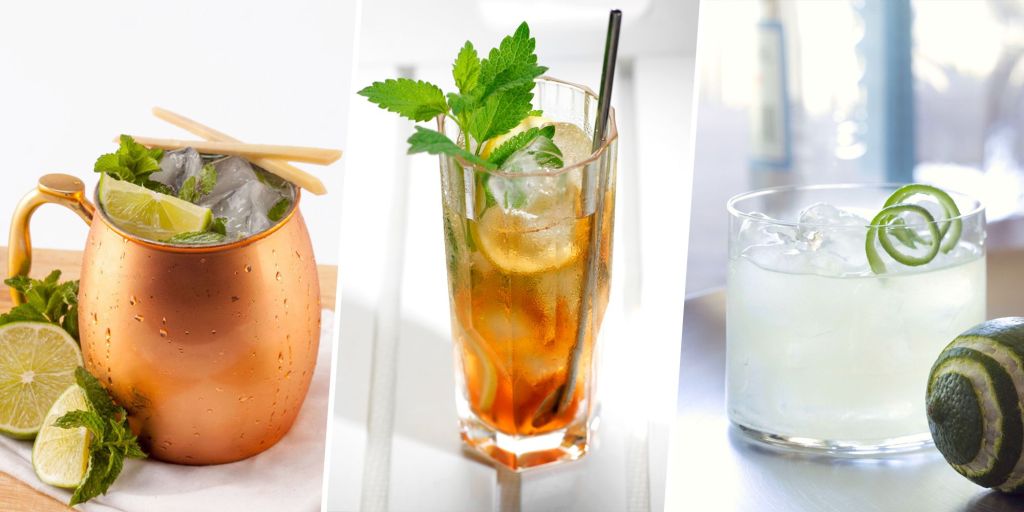
Remember when Moscow mules were all the rage? This popular drink includes four simple ingredients served in a signature chilled copper mug — vodka, lime juice, simple syrup, and ginger beer. It’s not too sweet and not too strong, and it’s perfect for a warm, sunny day. But why not try a slightly different version of this drink classic?
The Mexican mule is similar to the Moscow mule but made with tequila instead of vodka. It tastes reminiscent of a margarita — yet different. Plus, with Cinco de Mayo right around the corner, it’s time to start perfecting your recipe!
GIN BASIL SMASH
Basil has that robust herbal aroma that reminds you of a summer garden. It also happens to pair perfectly with gin. If you’re looking for a hearty drink that’s also refreshing on a warm spring day, try this modified version of a traditional gin smash. Once again, just four simple ingredients are all you’ll need — a good-quality gin, lemon juice, simple syrup, and fresh basil leaves. Just muddle a dozen or so leaves in a shaker, add remaining ingredients and ice, and shake to your heart’s content. Strain. Serve. Enjoy.
OLD FASHIONED
This drink is a vintage classic, and for a good reason. It combines bourbon or rye whiskey with bitters, sugar, stirred with plenty of ice and it’s often garnished with a twist of orange peel. Originally crafted over 200 years ago, few drinks have sustained such a following. Enjoy this taste of history as you sit back and enjoy the first signs of spring.
GEORGIA MINT JULEP
Another classic drink with a tasty twist, the Georgia mint julep is made with bourbon, muddled mint, bitters, and peach liqueur — thereby creating the sweet peach version of this favorite drink. The traditional mint julep became the official drink of the Kentucky Derby in the 1930s, but history tells us that it was around much earlier.
In fact, one of the first references to mint juleps dates back as far as the 1700s. Whether you choose to use the original recipe or try this updated version, either one is perfect for welcoming in spring.
SHOP PRINGLES FOR ALL OF YOUR SPRING COCKTAIL INGREDIENTS
You may be stuck at home, but you can still celebrate spring with these delicious cocktails. Avon, Colorado liquor store has everything you need to stock your bar, wine cellar, and beer fridge and have been serving to customers from last many years. Stop by today to shop an extensive selection.
Wine is a wonderfully complex beverage. It can be studied for decades, yet there is always more to be learned. Whether you’re a wine novice who only drinks it on rare occasions or an experienced connoisseur who appreciates fine wine on a regular basis, chances are you have some preconceived notions about wine that just aren’t true.
CHEAP WINE IS BAD WINE
There are many things that go into determining a wine’s price. Although quality is one factor, things like cost to produce including labor, materials, packaging, and even label design can affect the cost of the wine you see on the shelf. Popularity is another big factor — that’s right, wines from popular grapes, wineries, or regions can fetch a higher price than those of similar or even better quality from lesser-known origins. Oftentimes, it’s worth trying wine from a less popular variety or producer to get more value for your buck.
SCREW CAPS ARE A SIGN OF POOR QUALITY
Corks have been a part of wine-making tradition for over 300 years. So, when fine wine manufacturers started replacing them with screw caps just a few decades ago, many people just assumed that the wine inside wasn’t the same quality. On the contrary, wines that are sealed with corks are more prone to having problems with oxidation and cork taint — a term that is used to describe wines with an undesirable, strong musty smell. Cork taint can be avoided with the use of screw caps, and more and more producers are turning to them as a way to keep oxygen out while providing consumers with an easier way to get in.
SWEET WINES AREN’T FOR TRUE WINE DRINKERS
Although many novice wine-drinkers tend to favor sweeter wines because of their easy drinkability, this by no means indicates that sweet wines are of lesser quality or can’t be appreciated by the most experienced wine aficionado. In fact, some of the most coveted and respected wines in the world are sweet wines. For instance, Sauternes are a popular type of sweet wine originating from the famous Bordeaux region of France, and ice wines, one of the sweetest types of wine available, are made using grapes that were allowed to freeze on the vine, thereby concentrating the sugars and creating an almost syrupy, dessert-like drink.
WHITE WINE GOES FISH AND RED WINE GOES WITH BEEF
If you know nothing about wine, chances are you’ve at least heard that you should order white wine if you’re having chicken or fish, and red wine if you’re having beef. While this can be a good rule of thumb, it’s not a hard and fast rule.
For example, a classic pairing for salmon, tuna, and similar hearty fish dishes is pinot noir — a light red wine with medium to high acidity. Keep in mind that finding the right wine to pair with your dinner has more to do with complementing the flavors and sauces. And, when it really comes down to it, pairing wine with food is entirely subjective, so if it tastes good to you, that’s all that matters.
If you’re interested in gaining a better appreciation for wine or are looking for a shop to purchase a special bottle, stop by liquor store in Avon, Colorado.
In December Champagne Taittinger bought 69 hectares of farmland in Kent, with the aim of producing 300,000 bottles of English sparkling wine a year; last month Norfolk-based Flint Vineyard received a £23k fund to research one of the most prevalent cool-climate grape varieties, Bacchus, in order to cultivate it more efficiently; and just a few weeks ago, Bolney Wine Estate, one of the earliest vineyards to become established in the UK, announced its intention to invest £1m in a new winery at its Sussex site as it expands production.
Bumper harvests
After bumper harvests in 2013 and 2014, it seemed as though English wineries had quenched the world’s newfound thirst for English wine, producing 10.8m bottles of wine in total from both harvests. However, 2015 was a record-breaking vintage – the biggest any English winery has seen – and sales increased accordingly. Elizabeth Kelly, Wine Buyer for UK-based multiple retailer M&S told the Drinks Business in December that sales of Chapel Down’s English Sparkling Brut and Brut Rose had risen by 300% and “to meet demand,[at M&S] we have more than doubled our range of English and Welsh wines from 8 to 20.”
Similarly, English wine exports to international markets are still increasing. Julia Trustram Eve, Marketing Director of English Wine Producers expects that exports will form up to 30% of production across the UK over the next seven years.
It would seem that the only limiting factor regarding sales is production itself. However, recent years have seen production rising to meet demand. Miles Beale, Chief Executive of WSTA, has summarised the growth of English wine production: The production of English wine has seen record vintages in the last two years with 4.5m bottles in 2013 and 6.3m bottles in 2014. Based on the latest growth figures, this is set to double, with a staggering 12m bottles of English wine per year expected by 2020.
Challenging perceptions
With English wineries winning a record haul of medals at both national and international blind tasting competitions, it looks as though the quantity and quality of English wine are increasing hand in hand. Indeed most of the trade points to Ridgeview’s victory at the Decanter World Wine Awards in 2010, winning the Best Sparkling Wine Trophy – the first non-Champagne to win in the history of the award – as a key indicator of the shift in perception of English wine.
Signs of success such as this seem to have motivated winemakers across the category and Charlie Holland, Winemaker at Gusbourne Estate told WSET Business Development Manager Mike Best, “We’ve all upped our game considerably” as UK-based winemakers have inspired each other to make “exceptional wines”.
International Cool Climate Wine Symposium
English winemakers will again be in focus in May when the International Cool Climate Wine Symposium takes place in Brighton. The UK will be well-represented when cool-climate wine producers and industry representatives from all over the world gather to attend a programme of talks concerning climate, optimising fruit and wine quality, and styles of wine that can be produced.
WSET is proud to be a sponsor of the symposium and Ian Harris, WSET Chief Executive, will be leading a session on educating the wine industry. Ask the staff present in the Avon, Colorado liquor stores about English wine and why it is gaining popularity.
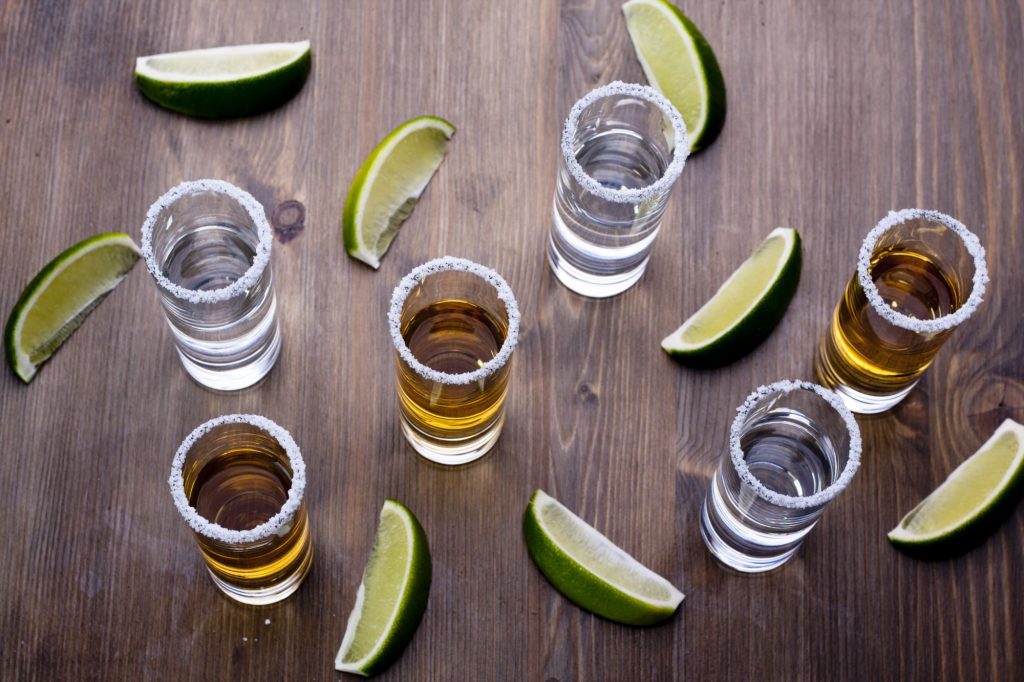
You no longer have to be in Mexico to enjoy a shot or a specialty drink whose main ingredient is Tequila. This specialty of Mexico has made its way into mainstream culture and is now a favorite in many countries across the world.
One reason for its recent surge in popularity may be that most people who partake in drinking, sipping or shooting Tequila find that they do not wake up with a hangover, as long as you are choosing a brand that is 100% agave. Without all the added sugars, you can toss back a couple of shots with friends and have no fear that your head will be pounding in the morning.
Another shocking side effect of drinking tequila is that it can potentially help you lose weight. Strange to hear, I know, as most diets say you have to prohibit drinking alcohol if you want to lose weight. However, Tequila contains agavins, the sweetener that is neither nectar nor sugar, so it does not raise your blood sugar levels.
For this reason, calories from Tequila pass straight through your systems, and while doing so have been shown to stimulate your metabolism and even assist in melting existing fats. Another excellent effect the agavins in Tequila is that they support calcium absorption, which can help ward off the weakening of bones and possibly osteoporosis.
If you have gut or belly problems, Tequila could be the cure that has been eluding you. Studies have shown that Tequila is prebiotic, which means it helps create a healthy environment for the good bacteria in your gut. However, it also possesses a large number of probiotics, which are the healthy bacteria that live in your intestines. This is where the research gets fun.
Some studies show that taking a shot before consuming food will increase both your appetite and your metabolism. Other studies focus in on the fact that it aids in the digestion process and soothes the intestinal tract, so they recommend a shot after the meal has been consumed.
Just bear in mind, If you choose to take a drink before a meal, after a meal or at both times, make sure they are small amounts. Overindulging and getting drunk on the stuff will wipe out all those healthy bacteria making it easier for toxins to take over.
And finally, Tequila has been found to help curb insomnia. Again, you need to make sure you only consume a small amount, as in two to three ounces to take advantage of this benefit. Tequila helps calm the nerves and aids in inducing sleep.
However, it’s important to note that it is best not to depend on any substance to help you sleep regularly. But now and then, Tequila maybe that special something extra you can enjoy that also enables you to relax and fall off to dreamland. The liquor stores in Avon, CO will satisfy all the needs of Tequila lovers. There you can get the best quality liquor according to your requirements.
Health Benefits Of Red Wine, Uses And Its Side Effects
A glass of red wine is loaded with antioxidants that have infinite health benefits to human body. The primary function of antioxidants present in red wine is to counter free radicals that strengthen the immunity.
Furthermore, the presence of resveratrol in red wine improves cholesterol that helps manage diabetes and fight obesity. And the flavonoids present in red wine inhibits the ROS (reactive oxygen species) thus protecting us from the harmful UV rays.
Red Wine
Red wine is made from black or red grapes using the must (pulp) of the grapes, however the fermentation process is carried out together with the grape skin which gives colour to the wine. During the fermentation alchohol, sugar and yeast are added to it . The quality, taste, colour, aroma and alchohol content may vary depending upon the wine maker.
Nutritional Value of Red Wine
Again the nutritional value of red wine may also vary from place to place depending on the amount of sugar and alcohol content. No matter what the content, red wine is full of antioxidants, especially flavonoids and Resveratrol.
The average calorie per 100ml of red wine may range from 50 to 85. Other minerals found in red wine are fluoride, manganese, potassium, iron, vitamin B6 and B12, phosphorus and choline.
Red Wine boost heart health
The presence of antioxidant in red wine makes it beneficial for cardiovascular health. It increases the good cholesterol (HDL) and prevents the build up of cholesterol boosting the heart health. Revestrol protects the linings of blood vessels and reduce blood clots.
Red Wine is also responsible for keeping the fat cells from maturing. And by activating a protein called sirtuin 1, it also protects the heart from inflammation.
Red wine good for diabetic patients
Moderate consumption of red wine has shown a decrease in cardiometabolic risks in people suffering from type 2 diabetes. Ethanol present in wine plays a vital role in metabolizing body glucose. As revesterol keeps in check the spikes and drop in blood pressure levels, people who consume red wine moderately are 30% safer from inflammation.
Red wine raise omega 3 fatty acid
Consumption of red wine can increase level of omega 3 fatty acids. High levels of omega 3 fatty acids acts as a shield against coronary heart diseases. Red wine is a major source of raising omega 3 fatty acids in plasma and red blood cells. Omega 3 fatty acids are also responsible for the overall cardiovascular health.
Anti aging properties of red wine
One of the most common known facts is that red wine helps in anti ageing. Yes, that’s true. Since red wine has high amount of antioxidants like flavonoids, resveratrol and tannin which restore collagen and elastic fiber to fight ageing. Moreover, the polyphenols help transform a dull complexion to give you a radiant glow.
Red wine for breast cancer prevention
High estrogen (women hormone) levels encourage the growth of cancer cells which is further increased by alchohol consumption. However, the AIs (aromatase inhibitors) present in red wine reduces estrogen levels and increases testosterone in woman approaching menopause.
Red wine prevents obesity
Revesterol present in red wine acts as a catalyst in converting the bad fat into calorie-burning brown fat (also called bige fat). It further enhances the oxidation of dietary fats and prevents the body from being overloaded.
The total process of conversion of white fat into brown fat that finally burns of as heat, thus preventing obesity and metabolic dysfunction.
Red wine prevents sunburn
Red wine reduces the harmful effects of the UV rays and can protect us from severe sunburn. UV rays activates ROS ( reactive oxygen species) , which oxidize fats, DNA and other molecule. As a result of which other enzymes are stimulated that harm skin cells. Flavonoids restricts the ROS in skin cells that are exposed to UV rays.
Uses of Red Wine
Its one of the most exquisite and fancy beverage used across the globe. Also Red Wine used as an appetizer with dinner in many parts of the globe. Since Red Wine has an excess amount of anti oxidants used as face packs and face massages to treat skin problems. Also used as a flavouring agent in preparation of cuisines.
If you really want to enjoy yourself with friends and make a memorable moment then visit a liquor store in Avon, Colorado where you can make sure that you taste the best liquor and have a pleasant time.
Since the early 1990s, the news media has been full of reports about the health benefits of red wine. However, it can be difficult for wine drinkers to sort out the facts from the hype. There have been numerous scientific studies into this issue, and the results can help you understand whether moderate consumption of red wine really might help improve your health.
Eight Health Benefits of Red Wine
According to the Mayo Clinic, it’s likely that red wine has more health benefits than any other type of alcohol. This is due to a number of substances in the wine. It includes polyphenol antioxidants, naturally occurring chemicals that can help combat oxidative stress in the body and result in a number of important health benefits. Two of these antioxidants, resveratrol and flavanoids, may have a notable effect on human health. Resveratrol, in particular, comes from the skins of grapes, which are left in during the fermentation of red wine and removed for white wine.
Red wine may improve your health in the following ways.
Improved Heart Health
One of red wine’s most famous health benefits is its effect on heart health. A study published in the journal Nature found that red wine consumption is indeed linked to lower risk of inflammation and coronary artery disease, as well as a reduced chance of dying from a heart attack. It also found that red wine produced according to traditional methods that maximize the amount of resveratrol and flavanoids in the wine is even better than other varieties at improving heart health.
Slower Aging and Potentially Increased Lifespan
You may have heard the claim that something in red wine slows aging and can increase lifespan. There have been a number of studies on this topic in recent years.
Potential Slowing of Alzheimer’s Disease
Red wine may also help slow the progress of Alzheimer’s Disease; however, research into this area is still being conducted. According to a study published in the journal Life Sciences, consuming red wine made from black-skinned grapes reduces oxidative damage and possibly has neurological implications. The researchers felt that with further study, substances in red wine may be proven to help slow the progression and prevent the neurological damage associated with Alzheimer’s.
Reduced Inflammation
Part of red wine’s heart health benefit comes from it’s ability to reduce inflammation in the body, but there are other implications for inflammation reduction. A study published in the American Journal of Biomedical Sciences found that red wine consumption also helped protect patients against the inflammatory response associated with various serious infections. This could potentially reduce long term damage from an elevated immune response in the body.
Cancer Prevention and Treatment
The resveratrol in red wine has also been shown to help in the prevention and treatment of certain cancers, according to an article published in Critical Reviews in Food Science and Nutrition. There are several important aspects of this benefit:
Resveratrol in red wine can protect against damage caused by carcinogens.
It can stop tumors from starting to grow.
It can slow the spread of cancer cells throughout the body and inhibit the growth of existing tumors.
It can prevent mutation in cancer cells that might be resistant to chemotherapy.
Diabetes Prevention
Although there’s still much to discover about the effect of red wine consumption on already-diagnosed diabetes, a review of the literature in the Journal of Medical Biochemistry found that the alcohol in red wine could actually prevent diabetes. However, this effect may not be limited to red wine. The article notes that this preventative benefit is most likely linked to moderate alcohol consumption in any form.
Reduced Blood Clotting
The same review of the literature in the Journal of Medical Biochemistry demonstrated that substances in red wine reduced the risk of blood clots. Blood clots are one of the major causes of strokes.
Prevention of Tooth Decay
Red wine may also help with preventing tooth decay. According to an article in the journal Current Opinion in Biotechnology, several foods and beverages have been shown to reduce the incidence of caries, or cavities, in people that consume them. One of those foods was red wine.
Benefits in Moderation
There’s little doubt that red wine has many health benefits, but those benefits only apply if you drink wine in moderation. Understanding the potential health benefits and the amount of red wine that can help is essential for making smart decisions about whether regular wine consumption is something you want to include in your healthy diet.
Now that you know the benefits of red wine, it is time to grab a bottle from the liquor store in Avon, Colorado which provides the best quality of liquor and wine.





 Paul Williams